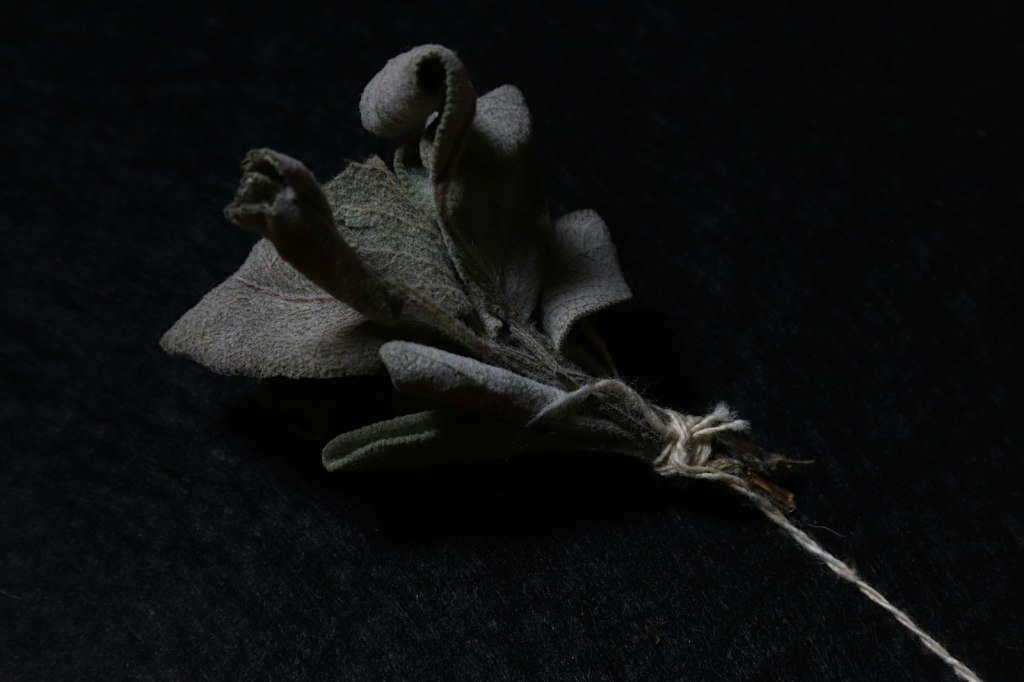
Learning how to make a herb smoke bundle is one of the most satisfying crafting projects you can do in late spring, because the garden is already doing half the work. Rosemary is putting out new growth, lavender is coming into flower, and common sage is lush. A bundle of these dried herbs, tied with cotton string and burned briefly in a heatproof dish, gives you a sensory marker for a change of mood or a change of room, and it costs almost nothing.
Why a herb smoke bundle works as a ritual tool
Smell is tied closely to memory and attention, which is why a scent you only use for one purpose becomes a cue. When you light the same herbs each time you reset a room, your mind learns the pattern: this is the point where the day shifts. The craft adds another layer. Picking, drying, trimming and binding take days, and that slow handling is part of the working. You are building a relationship with the plants before they ever burn.
Each herb brings its own character. Rosemary is sharp, resinous and persistent, the one that stays in the room. Lavender is softer and floral, and it tends to settle things. Common sage is earthy and dry, a steady presence. Treat them as allies with preferences rather than ingredients, and the bundle you make will reflect that.
A cultural note before you light anything
Smoke is used in ceremony by many cultures, and some of those practices belong to the people who hold them. In Australia, Aboriginal smoking ceremonies are a specific cultural practice. Deadly Story describes a smoking as part of welcoming and as a way of cleansing a place and protecting visitors, and notes that how the fire is lit and what plant material is used matters, with some mobs using only certain leaves or bark. A garden herb bundle is a different thing, which is why this post calls it a smoke bundle and does not borrow the names of other traditions. If you want to experience a smoking ceremony, attend one led by the people whose ceremony it is.
Choosing herbs and sourcing them legally
Stick to herbs you can identify with complete certainty. Rosemary, lavender, common sage, thyme and oregano are all garden staples and burn gently. Never use a plant you cannot name, and keep ornamentals such as oleander well away from this project. Do not burn anything you have not positively identified as a culinary or well-known aromatic herb.
Pick from your own garden, a friend’s garden with permission, or buy from a nursery or market. Wild picking needs more care. NSW Environment and Heritage states that native plants are protected under the Biodiversity Conservation Act 2016, that it is an offence to pick or possess listed protected or threatened plants for commercial purposes without a licence, and that plants should always be legally sourced, meaning licensed stock or the landowner’s permission. Details differ by state, so check the NSW page on protected native plant licences or your own state’s equivalent before taking anything from the bush, and leave national parks and reserves alone.
If your garden is bare, dried herbs and bundles are sold by US suppliers such as Mountain Rose Herbs. Australian biosecurity rules and shipping costs apply to plant material arriving from overseas, so read the Department of Agriculture guidance first. A local nursery is usually faster and simpler.
What you need
You need fresh cuttings of two or three herbs, roughly 15 to 25 cm long, plain cotton or hemp string (synthetic string melts and smells dreadful), sharp scissors or secateurs, a warm airy place to dry the bundle, and a heatproof dish for burning, such as a ceramic bowl or a shell set on a layer of sand. Keep a small jar or bowl of sand nearby to put the bundle out.
How to make a herb smoke bundle, start to finish
Cut your herbs in the morning once the dew has dried, because wet stems mould while they dry. Take modestly from each plant so it keeps growing, and thank it if that suits your practice. Shake out any insects and strip the leaves from the bottom few centimetres of each stem so you have a clean handle. Lay the stems together with the woodier rosemary in the middle, the lavender and sage around it, and keep the bundle slim, about the thickness of your thumb or a little more. A fat bundle holds moisture in the centre and refuses to dry.
Wrap the string tightly around the base, then spiral it up the bundle and back down, pulling firmly, and finish with a knot at the base. Herbs shrink as they dry, so check the tie after a day and tighten it. Hang the bundle upside down in a dry, shaded, well-ventilated spot, away from direct sun and damp. It usually takes one to two weeks depending on humidity, and longer in a muggy coastal stretch. It is ready when the leaves are crisp and the stems snap rather than bend. If any part feels cool or soft, give it more time, and bin the bundle if you see mould.
While it dries, you can set a simple intention by saying it aloud each time you pass it, which turns the waiting into part of the work. A hand-sewn spell sachet uses many of the same herbs if you have offcuts, and the loose incense guide covers burning aromatics on charcoal if you prefer that route.
How to burn it safely
Open a window first. Hold the bundle over your heatproof dish and light the tip, let it flame for a few seconds, then blow it out so it smoulders. Dried herbs need a moment to catch, so be patient rather than holding a flame to it for long. Keep the dish under the bundle at all times to catch embers and ash, and never walk away from it. Many people carry the dish slowly through a room, and others simply let it smoulder on the dish for a minute or two while they set an intention. Keep it brief, because you want a light aroma, not a haze.
To put it out, press the lit end firmly into the sand until the smoke stops, then check it is cold before storing it. Do not douse it with water, as that ruins the bundle and leaves it soggy and mouldy. A bundle can be relit many times.
Safety section
Treat this like any open flame. Keep it away from curtains, paper and dry bedding, and use only on a stable heatproof surface. If you burn outdoors, check for fire bans in your state before you light anything. Smoke can set off smoke alarms indoors, so know where yours is and do not cover or disable it.
Smoke can irritate, so skip this project if you or anyone in the home has asthma or a breathing sensitivity, and keep children away from the flame and ash. Do not burn it in a closed room or around pregnant people or babies. This post makes no health claims, and a smoke bundle is a ritual tool only.
Pets need particular care. Birds in particular have very sensitive respiratory systems, and avian vets generally advise keeping airborne smoke and fumes away from them, so keep a pet bird well out of the room and the air flow. For dogs, cats and other animals, keep them out of the room while you burn and let it ventilate fully before they return. If you are unsure about a plant or an animal’s reaction, ask your vet.
Using your bundle through the season
Make one bundle for when you move house or rearrange a room, and one for after a hard week. Label each with the date and herbs, and store them wrapped in a paper bag or a breathable box, away from damp. Over time you will learn which herbs you favour. Some people also add a plain dressed candle to the working, and the guide to dressing a candle covers that safely.
With the weather warming, this is a good time to start drying herbs for the whole season ahead. Cut a few extra stems each week and you will have a good stock by the time the summer solstice arrives.


Leave a Reply