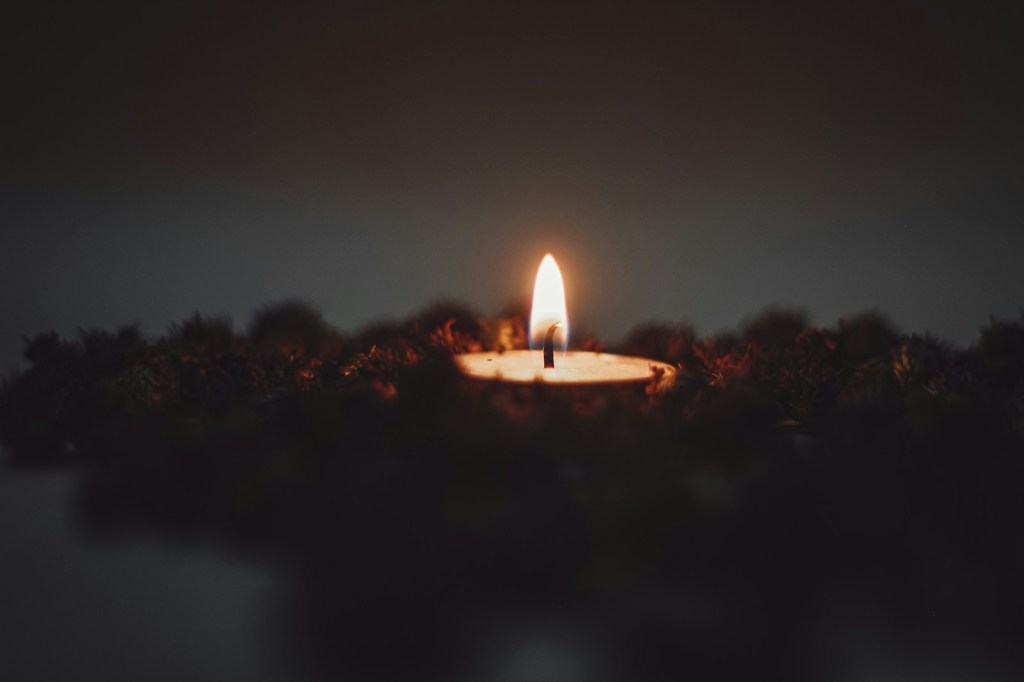
Learning how to cast a circle is one of the most useful skills a practitioner can have, because it gives every other working a clear beginning, a boundary and an end. A circle is a marked space you step into on purpose and step out of on purpose. That is the whole idea, and everything else is detail.
Why a circle works
Magic is mostly attention, and attention leaks. A phone buzzes, the dog wanders in, your mind drifts to tomorrow’s to-do list. A circle works as a threshold. When you draw a line around a small area and tell yourself that what happens inside it is ritual, you change how you behave in that space. Your body slows down, your voice drops and the working gets your full focus.
Whether the circle also does something beyond that is a matter of belief and tradition, and practitioners differ. The mechanism that needs no belief is the boundary itself. It tells your brain that the ordinary day has paused.
A short history of the magic circle
Circles are old in Western ritual magic. The Heptameron, a grimoire printed in English in the 1655 edition of the Fourth Book of Occult Philosophy credited to Agrippa, says the circles hold great power, calling them “certain fortresses to defend the operators safe from the evil spirits”. In that tradition the circle was a protective enclosure for a magician summoning spirits, so it was about defence.
The circle most witches use today comes through Wicca. Gerald Gardner described his craft in books such as Witchcraft Today (1954), and he supplemented his coven’s rituals with ideas borrowed from Freemasonry, ceremonial magic and the writings of Aleister Crowley. The Museum of Witchcraft and Magic describes Gardner as the founder of modern Wicca. Many modern traditions kept the circle but changed its purpose, so it often reads as a sacred room rather than a fortress. Plenty of practitioners outside Wicca skip it entirely, and that is fine too.
What you need
You need very little. Pick one way to mark the boundary: a length of cord or ribbon laid in a loop, a ring of stones from the garden, or a ring of tealights in jars. Add one candle as the centre point if you like. Some traditions use a circle about nine feet across, but a small one that fits you and a low table is more practical in a flat or a backyard.
Indoors, a cord is the best option because it is reusable and safe. Candles bring their own character to the work: a flame is a living thing that asks for respect and watchfulness. If you want to buy candle holders or herbs for your altar, US suppliers such as Sage Goddess are popular, though Australian biosecurity rules and shipping costs apply to US orders, so check the Department of Agriculture guidance first. Local op shops and hardware stores sell perfectly good jars and holders.
Choosing your directions in the southern hemisphere
Many circle instructions were written in the northern hemisphere, where the Sun appears to travel clockwise, so “deosil” (sunwise) means clockwise there. In Australia the Sun crosses the northern sky, moving from east through north to west, which is anticlockwise as you look down on the ground. Some local practitioners walk anticlockwise to open and clockwise to close, and others keep the traditional clockwise opening anyway. Both are valid. Pick one, write it in your grimoire and stay consistent so your body learns the pattern.
East is still east, and if your tradition uses the four directions, it helps to learn them by the real landmarks around you. If your practice leans on the seasons, our southern hemisphere Wheel of the Year guide is a good companion.
How to cast a circle
Choose a time when you will not be interrupted, tidy the space and put pets out of the room. Lay your cord in a loop on the floor, large enough for you to sit comfortably with a small table or tray inside, leaving a small gap in the cord to act as a doorway. Place a candle in a stable holder on a heatproof surface at the centre. Stand at the doorway, take three slow breaths and say aloud, in your own words, that you are making a space for a particular piece of work. Step through the gap, close the loop with your hands so the cord is continuous, then walk the edge slowly in the direction you have chosen, pointing at the cord with a finger or a wand, a stick or simply your open hand, and saying something plain such as “this space is set apart for my work”. Return to your starting place and light the candle. Sit down, do the working you came for, whether that is a spell, a meditation or journaling, and keep your hands and sleeves away from the flame. When you are finished, thank the space aloud, walk the edge once more in the opposite direction, saying that the work is complete, and extinguish the flame with a snuffer or a spoon. Open the gap in the cord, step out and lift the cord into a coil. Eat or drink something small, wash your hands and write a few lines in your grimoire about what you noticed.
Safety
Never leave a lit candle unattended and keep it clear of curtains, paper, dried herbs and hair. Use a stable holder on a heatproof surface, and keep a glass of water or a damp cloth within reach. Keep children and pets out of the room, because curious animals knock over candles and chew cords.
Some guides draw circles with salt. If you use salt, keep it indoors on a hard floor only and sweep it up afterwards, because salt can be harmful to pets if eaten. Never pour salt on lawn, garden beds or pot plants, as it can damage or kill plants and make soil unusable. Stones, cord and tealights in jars avoid the issue altogether.
If you work outdoors, check the fire danger rating and any local fire restrictions with your state fire authority before lighting anything, and skip candles entirely on a total fire ban day. Use a lantern or LED light instead. A circle is a ritual practice, not a replacement for sensible precautions or professional help.
Making it a habit
Keep your first few circles short and plain. Over time you may add elements, such as a spoken invitation, an altar layout or a seasonal theme. Our guide to setting up a witch’s altar in a small space pairs well with this, and how to dress a candle is a good next step for the centre light.
The test of a good circle is simple. When you step out of it, do you feel that you have given the work your full attention? If yes, it is doing its job, whatever tradition you follow.


Leave a Reply