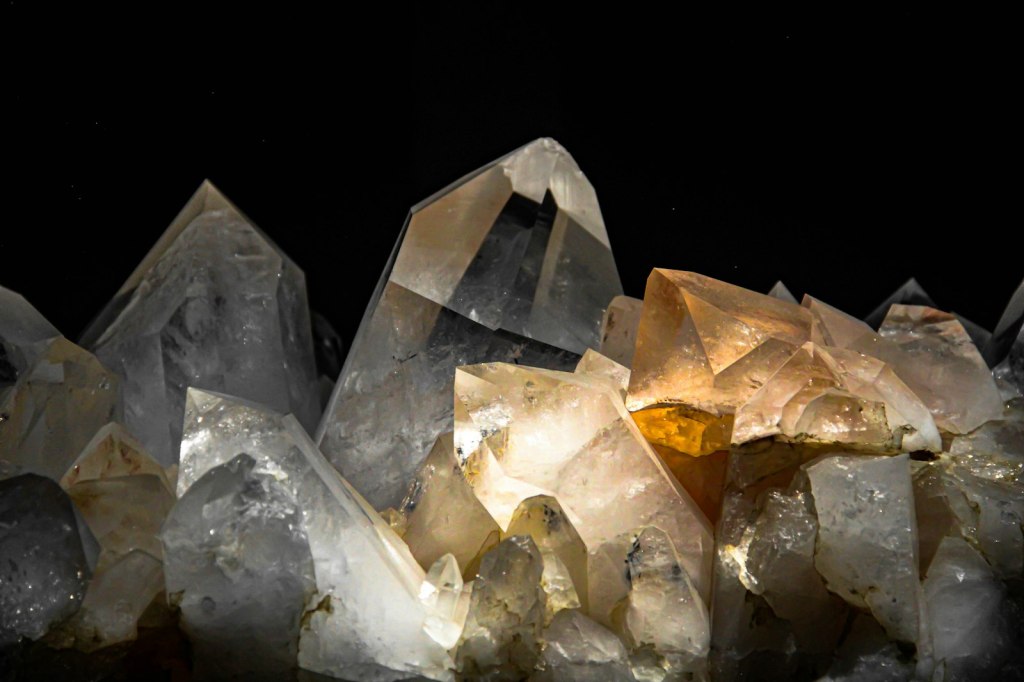
Knowing how to cleanse crystals properly matters more than most guides admit, because the popular methods can quietly ruin stones. Soak the wrong one in water and it dissolves, flakes or leaches something you would rather not touch. This guide covers why people cleanse crystals at all, which methods suit which stones, and a gentle dry working that is safe for nearly everything in your collection.
Why Cleansing Works as a Practice
Crystals pick up nothing you can measure. What changes is you. A stone that has sat in your pocket through a bad month, or on a shelf through a house move, becomes a marker for that time. Cleansing is the act of deliberately closing that chapter and handing the stone a fresh job.
That is the mechanism: a clear start and end point, performed with your hands and attention. The ritual gives your mind a boundary. Many practitioners also treat stones as allies with their own character, and a cleansing is a courtesy between you and them, a way of saying the old work is finished. None of this needs a physical claim about energy to be worth doing, and the method you choose should never put the stone at risk.
Check the Stone Before the Method
Every cleansing method suits some minerals and punishes others. Hardness and chemistry decide it. Crystals.com publishes a detailed guide to which crystals can go in water, and its findings are the backbone of the list below.
According to that guide, these should stay out of water entirely:
- Selenite (Mohs 2) is a form of gypsum and dissolves in water. Even brief contact causes cloudiness and a powdery surface.
- Halite is salt in mineral form and dissolves completely.
- Calcite reacts with even mildly acidic tap water and wears away over time.
- Malachite is copper carbonate hydroxide and releases copper compounds that are toxic. Never use it in drinking water or baths.
- Lepidolite flakes apart in water and can release lithium and aluminium compounds.
- Pyrite and hematite rust, leaving residue and a degraded surface.
- Celestite, fluorite and kyanite are fragile, soft or prone to splitting along cleavage planes when wet.
- Lapis lazuli has pyrite and calcite inclusions that degrade in water.
The same source advises a quick rinse only for moonstone, labradorite, opal and turquoise, and says to avoid salt water for everything except the quartz family. If you do not know what a stone is, treat it as the most delicate thing in the box and use a dry method.
Sunlight, Moonlight and Fading
Sunlight is a popular way to reset stones, and it is the one that causes the most regret in Australia, where summer sun is fierce and windowsills heat up fast. The crystals.com guide notes that UV can fade colour over time, naming amethyst, and it says moonlight will not fade colour-sensitive minerals like amethyst or rose quartz. If a stone has any colour you care about, keep it out of direct sun and use moonlight or a shaded spot.
Heat is its own risk. A dark stone left on a hot sill can crack, and a stone that is wet in strong sun is worse off than one that is dry. For timing, a full moon is the traditional choice. Our guide to making moon water safely covers how to work with the moon’s phases without putting stones in the water.
Methods That Suit Almost Every Stone
The dry methods are the reliable ones. Smoke from a dried herb bundle or a stick of incense is gentle on nearly every mineral, provided you keep the stone clear of embers and ash. Sound works too: a bell, a singing bowl or a few firm claps near the stones asks nothing of them physically. Breath is the simplest of all, a slow exhale over the stone while you hold it.
A bed of dry brown rice, a bowl of clean dry sand, or a plate of dry herbs such as rosemary or lavender can hold stones overnight. These suit even soft minerals, because nothing wet or abrasive touches them. Skip the sand for soft, delicate stones like selenite, which can scratch, and use a cloth lining instead.
Placing stones on a shelf or on your altar is also a legitimate reset. If you are building one, see our guide to setting up an altar in a small space.
A Simple Dry Cleansing Working
Choose a time when the house is quiet, perhaps the evening of a full moon or a Sunday when you have nothing pressing. Lay a clean cloth on a table and set out the stones you want to reset, checking each one against the lists above so you know none will be harmed. Light a single candle in a holder on a heat-proof surface away from the cloth, and light a stick of incense or a small bundle of dried rosemary if you want smoke. Pick up the first stone, hold it in both hands, and say aloud what it has done for you since you last cleansed it, whether that was steadying you through a hard conversation or simply sitting on your desk. Thank it plainly, then say that its work is complete and it is free to begin again. Pass the stone slowly through the smoke or breathe out across it once, and place it on the cloth, then repeat for each stone in turn. When all the stones are done, leave them in place for the rest of the evening, then snuff the candle and the incense, check that nothing is still smouldering, and return the stones to their shelf or pouch.
Safety
Never put a stone you cannot identify into water you will drink, bathe in or use on skin. Keep malachite, pyrite, galena, cinnabar, arsenopyrite and any copper or lead bearing mineral out of drinking water and baths completely. If you want the look of crystals near water, use a sealed glass container so the stone never touches the liquid.
Burning anything brings fire risk. Use a heat-proof dish, keep flames and embers well away from cloth, paper, curtains and dried herbs, and never leave a candle or smouldering bundle unattended. Keep stones, herbs and smoke away from pets and young children, as small stones are a choking hazard and some herbs are toxic to animals. Ventilate the room, and skip smoke altogether if anyone in the house has asthma or breathing sensitivities. Do not use cleansing as a substitute for any health care.
Where to Find Stones and Supplies
Local rock shops and markets let you handle a stone and ask where it came from. For online ordering, Mineralism in the US stocks a wide range of minerals. Australian biosecurity rules and shipping costs apply to US orders, and the Department of Agriculture explains what can enter the country, which matters most if you are buying dried herbs, plant material or anything packed with organic matter.
Keeping It Simple
You do not need to cleanse every stone every week. Reset them when something changes, such as a move, a new job, the end of a project or a long stretch of use. Pick the method that suits the mineral, keep it dry when in doubt, and let the ritual do the real work of marking a clean start.


Leave a Reply