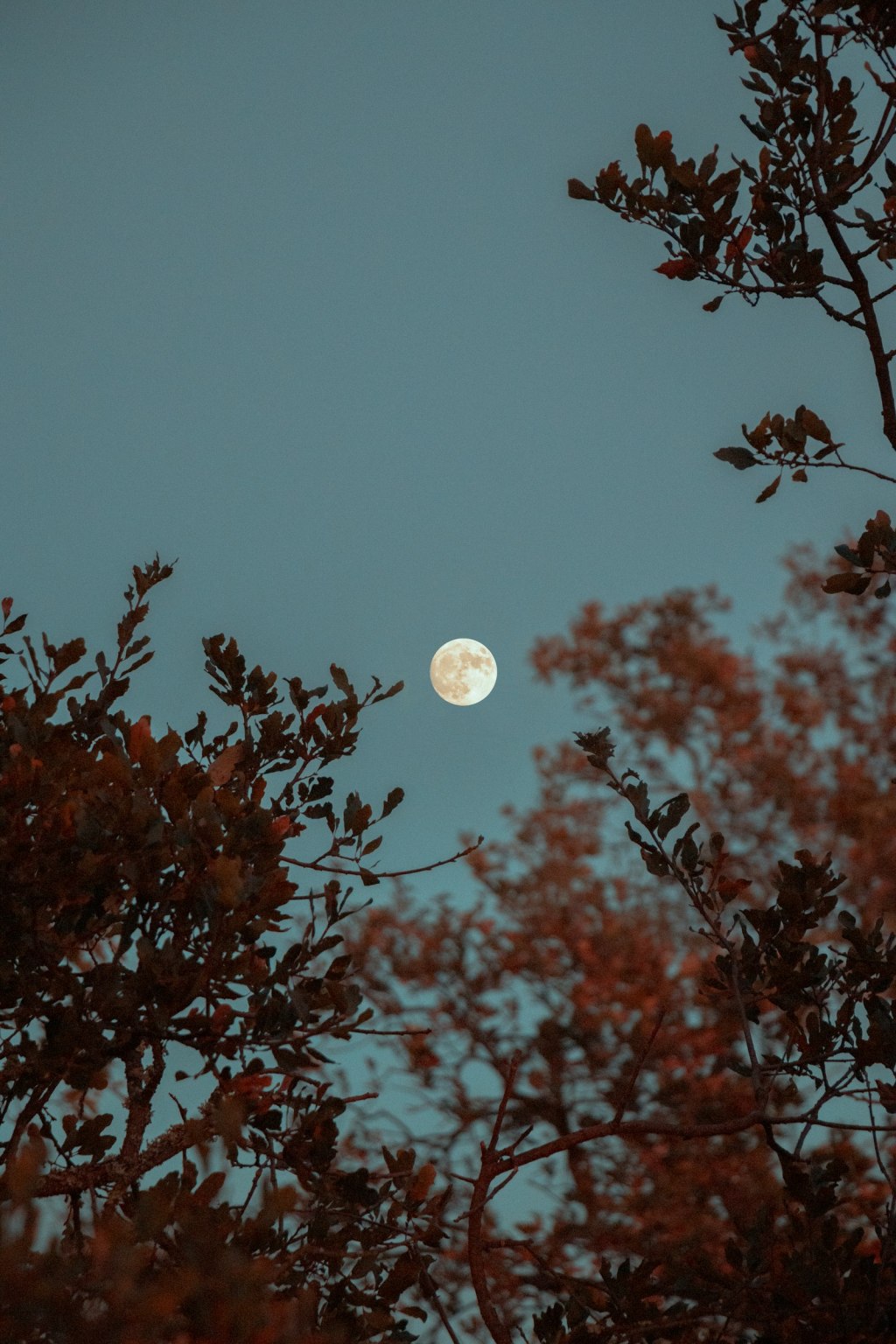
Moon water is plain water left out under the full moon so you can use it later as a ritual ingredient, and the full moon on 26 October 2026 is a good one to practise with. This guide covers what moon water is, why the practice holds together as a ritual, how to make it safely, and how to use it without doing anything silly.
What moon water actually is
Moon water is modern folk practice. You will see it described as ancient, but I could not find a reliable source showing a long, documented tradition under that name, so treat it as a contemporary craft that borrows from older ideas about dew, night air and lunar timing. That is not a flaw. A lot of working practice is recent, and it still does its job if you understand what the job is.
The job is a marker. Water is the most ordinary substance in your house, and setting it out under a particular moon turns it into something you have set apart on purpose. Later, when you use it, the water carries the memory of the night, the intention and the phase. Nothing about the liquid changes in a way you could measure, and no claim here says otherwise.
How to make moon water: why the full moon, and why this one
A full Moon happens when the Moon sits opposite the Sun as seen from Earth, so we see its whole sunlit face. NASA explains that it rises around sunset and sets around sunrise, which means you get a full night of it. The cycle repeats roughly every 29.5 days, so you get twelve or thirteen chances a year.
This month the full moon peaks at 3.12pm AEDT on Monday 26 October, with the Moon at 2 degrees Taurus. That is mid-afternoon in eastern Australia, before moonrise, which does not matter for this craft. The moon will be full to the eye on Sunday night, Monday night and Tuesday night, so you have a few evenings. For the astrology of the night, see our post on the Hunter’s Moon in Taurus.
In astrology, Taurus is an earth sign tied to the senses, comfort, money, food and the body. That is interpretation, not astronomy. If you want a theme for your water, something like steadiness, enough, or looking after what you already have suits the sign. Choose one theme only. Water with five intentions tends to get used for none of them.
If you are new to working with the lunar cycle, the moon phases guide is a good companion read.
What you need
Keep this simple. You need a clean glass jar or bottle with a lid, since glass does not take on smells and you can see the water. You need some water: tap water is fine in most Australian homes, and bottled or filtered works too. Something to label it with, such as masking tape and a pen, saves you from mystery jars in the fridge. A safe spot completes the list: a windowsill that catches the moon, a balcony table, a garden bench or a bowl on a covered step.
Everything else is optional. Many people add nothing at all, and that is a perfectly good version.
Crystals in moon water: use the indirect method
This is where the practice can go wrong. Plenty of popular stones dissolve, flake, rust or release unpleasant compounds in water. According to a safety guide from Crystals.com, selenite and halite dissolve, calcite breaks down over time, and malachite releases copper compounds. The same guide lists pyrite, which reacts with water and oxygen, and says stones containing lead, mercury or arsenic should never touch water you will drink or bathe in.
The safe approach is the indirect method. Put the stone in a small sealed glass container, set that inside the larger jar of water, and the crystal never touches the water. Even if a stone is often described as water-safe, the sealed container costs you nothing, so use it for every stone. If you are shopping, Mineralism in the US sells a wide range of stones. Australian biosecurity rules and shipping costs apply to US orders, so check the Department of Agriculture before you buy.
The method
Pick your evening and decide your theme before you touch anything. Wash the jar with hot water and leave it to dry, then fill it about three quarters full so the water has room and a lid does not strain. Hold the jar for a moment and say what the water is for in a sentence or two, out loud or silently. Then screw the lid on, label it with the date and moon, and carry it to your chosen spot at about moonrise. Leave it out overnight, and bring it inside before sunrise, or at least before the sun hits it, because direct sun on a sealed jar for hours will warm it and can encourage growth in the water. If rain, wind or a nosy possum makes the spot risky, put the jar on a windowsill instead, since the practice does not depend on the moon touching the water directly and many people simply use a window. Cloudy nights count too. You set the water out under that moon, and the cloud does not undo the act. Once it is back inside, thank the moon in your own words, then store it in a cool, dark spot and write the date and your theme in your grimoire.
Safety
I do not recommend drinking moon water. It has sat out in the open, and nothing about the ritual makes it safe to drink after that. Treat it as a ritual ingredient only, and make no assumptions that it has any effect on your health.
Keep the jar lidded and out of reach of children and pets, and keep it away from the food you eat. Label it clearly so nobody mistakes it for drinking water. Use it within about a week and throw out any that smells off, looks cloudy or grows anything. If you add herbs, remember some common ritual plants, such as oleander, are toxic and should never go anywhere near a vessel that could be mistaken for drinking water. Never leave a candle burning near it unattended, and use stable surfaces on balconies where wind can tip a jar over the edge.
Glass can crack with sudden temperature changes, so do not put a cold jar straight onto a hot surface, and keep it away from heat sources.
How to use it
Use the water as a ritual ingredient. You can dab a little on your wrists or forehead before a working if your skin tolerates plain water, which for most people it does. You can add a few drops to a small bowl on your altar, wipe it across a tool such as a wand, or sprinkle it over a spell jar or sachet when you assemble one, as in our guides to the spell jar. It also works for watering a house plant or a garden bed, which is a pleasant way to close the loop: plain water goes to a living thing, and you spend the intention in a way that feeds something.
When the water is spent, pour what is left on the garden or down the drain, rinse the jar and put it away. Stale moon water is just stale water, and it is better to make a fresh batch next month than to keep a shelf of old jars.
Southern hemisphere notes
The craft is the same on both sides of the equator. What changes is the season: spring evenings are mild, the garden is waking up and the days are lengthening toward the 31 October Beltane. If you are connecting this to the wheel, our southern hemisphere Wheel of the Year guide explains where we are in the turning year.
Treat the moon water as one small, deliberate thing. Make one jar, give it one purpose and use it, and you will learn more from that than from collecting a dozen.


Leave a Reply