Learning how to make a scrying mirror takes an afternoon, a cheap picture frame and a can of black paint. A scrying mirror, also called a black mirror or dark mirror, is a dark reflective surface used for divination, and people have been making them for centuries. This guide covers why a dark surface suits the practice, the documented history behind the famous examples, a safe method using hardware store materials, and a first-use working written as one flowing ritual. It also covers a fire risk that most craft guides skip, which matters a great deal in an Australian summer.
Why a Dark Surface Works for Scrying
Scrying means gazing softly into a surface until images, impressions or thoughts rise to meet you. A bright silvered mirror gives your eyes plenty to hold onto: your own face, the window behind you, the lamp. A black mirror returns only dim shapes, so the eye has nothing to anchor on. With low light and a relaxed gaze, vision drifts, and practitioners read whatever surfaces as material for the working. Most treat it as symbolic information to record and interpret rather than a guaranteed prediction. That is the practitioner’s account of the mechanism, and it is a description of practice rather than a scientific claim.
Glass is the quiet ally in this project. It does nothing by itself. Its character is stillness, and the mirror does its work by holding still while you do the moving.
A Short History of Black Mirrors
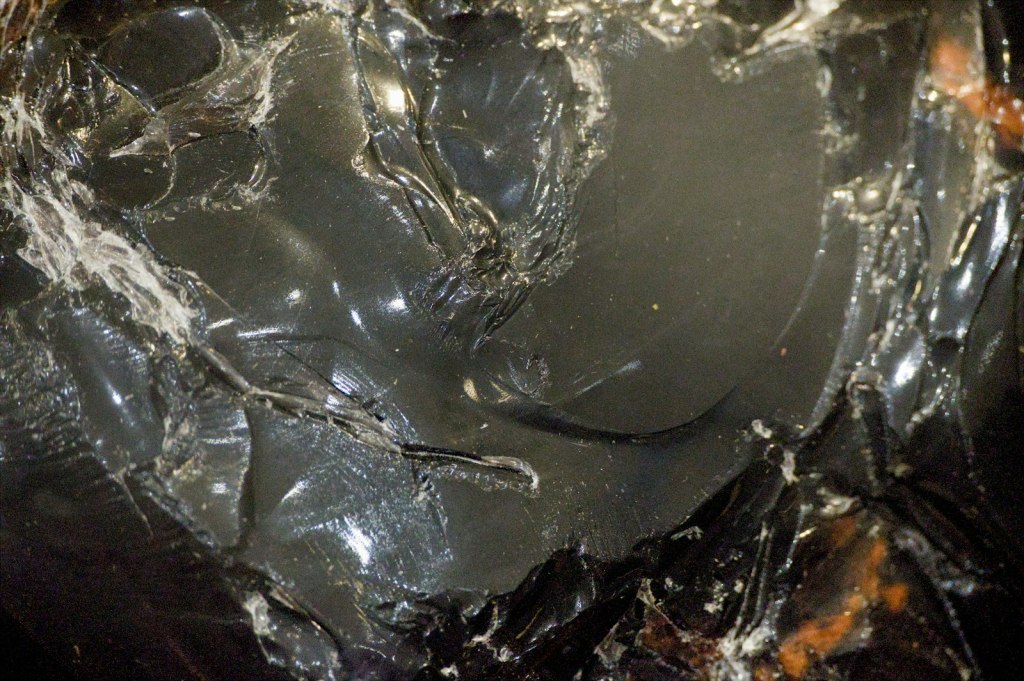
The best known black mirror sits in the British Museum and is linked to John Dee, the Elizabethan adviser to Queen Elizabeth I who was also deeply involved in the occult. Researchers led by Stuart Campbell of the University of Manchester analysed the obsidian and matched it to Pachuca in central Mexico, a source the Aztecs mined heavily, as Live Science reports. The disc is Aztec in origin, roughly 18.5 centimetres across, and Dee most likely acquired it after it reached Europe. Exactly how he got it is unknown. Aztec obsidian mirrors were associated with the god Tezcatlipoca, whose name means “smoking mirror”.
The Science Museum Group holds a convex black glass in a shark skin case that was once believed to be Dee’s scrying mirror. It is better understood as a Claude glass, the slightly curved dark mirrors that eighteenth century artists and tourists used to frame landscapes, named after the painter Claude Lorrain (1600 to 1682). The Museum of Witchcraft and Magic holds a home-made angelic scrying mirror too: a concave dark glass in a wide wooden frame bearing the names of four angels, a design first recorded in Francis Barrett’s The Magus in 1801. The museum describes it as a practical, home-made tool, which is exactly what you are about to make.
What You Need to Make a Scrying Mirror
- A clip-style or box picture frame with a flat glass panel, around 20 x 25 cm, with smooth uncracked edges
- Black spray paint suitable for glass (matt is forgiving, gloss also works), or black enamel paint and a soft brush
- Painter’s tape, newspaper or a drop sheet
- Disposable gloves and a respirator or mask suited to paint fumes, as the paint label advises
- Glass cleaner and a lint-free cloth
- A dark cloth for wrapping the finished mirror
How to Make a Scrying Mirror: The Method
Work outdoors in the shade on a still day, or in a very well ventilated space, with pets and children well away and your gloves on. Remove the glass from the frame and run a gloved finger along all four edges. If you find a chip or crack, set that glass aside and use another, because damaged glass can break during handling. Clean both sides and let them dry fully.
Lay the glass on newspaper with the side that will face the backing board upward. This is the back, and the paint goes here. You will look through the glass at the black layer, which keeps the front surface clean and gives a deeper, glossier dark than paint on the front would. Spray from the distance the can recommends, usually 20 to 30 cm, in light sweeping passes. Build two or three thin coats instead of one heavy one, which runs and drips. Let each coat dry as the label directs, then leave the glass to cure completely before you touch it.
Hold the glass up to a light and check for pinholes or thin patches, which show as bright specks. Add another thin coat where needed. Once it has cured, set the glass back in the frame with the painted side against the backing board, keeping paint off the front face. Wipe the front with a soft dry cloth and your scrying mirror is ready to be prepared for use.
Fire Safety: Keep Your Scrying Mirror Out of the Sun
This is the safety point most craft guides leave out. Fire services have attended house fires caused by sunlight concentrated by mirrors and glass. The London Fire Brigade describes a case where a concave mirror focused winter sun onto a shirt draped over a chair, and its advice is to keep mirrors, crystals and glass ornaments out of direct sunlight. Curved and magnifying mirrors are the usual culprits in reported incidents, which is one reason to stick with flat glass.
Australian summer sun is strong, and it moves across windowsills through the day. Store your mirror wrapped in its cloth, in a drawer or a box, and never leave it on a sill or propped facing a window.
A few more safety notes. Wear gloves when handling the glass and tape the edges if they feel sharp. Keep aerosol paint well away from candles and flames, and do not light anything near the mirror until the fumes have fully cleared. If you use a candle, set it in a stable holder on a heatproof surface, keep fabric away from it and never leave it unattended. Do not use scrying to make medical, legal or financial decisions. If your eyes tire or you feel unsettled, stop, turn the lights on and drink some water.
Preparing and Using Your Black Mirror for the First Time
Choose an evening close to the dark of the moon. The next new moon falls on 9 December at 11.52am AEDT, at about 16 degrees of Sagittarius, so the nights either side of it suit this work. Make the room dim and quiet, close the door, silence your phone and set a notebook within reach. Wash your hands, hold the mirror in both hands and say aloud what it is for, perhaps a quiet place to listen to what is already moving in your own awareness. Light one candle in a stable holder off to the side and slightly behind your shoulder, so the flame does not glare back from the glass. Rest the mirror on a table at a gentle angle so it reflects the dark wall or ceiling and not your face, soften your gaze, breathe slowly and blink as you normally would. Stay for ten to fifteen minutes the first time, letting shapes and impressions come and go without chasing them. When you are finished, thank the glass out loud, cover it with its cloth, put the candle out and write down everything you noticed while it is fresh, even the parts that seem like nothing. A grimoire is the right home for those notes, and patterns tend to appear over several sessions rather than one. Finish with something to eat or drink so you come all the way back into the room.
Caring for Your Scrying Mirror
Keep the mirror wrapped and out of direct light between sessions. Wipe the front with a soft dry cloth, and re-coat the back if the paint ever flakes. If you enjoy hands-on divination, our guide on how to use a pendulum covers another simple tool you can make part of the same practice.
A homemade black mirror is a modest object, and that suits it. Dee’s disc carried centuries of story. Yours starts with a bit of glass, some paint and your own patient attention, and the history gets written in your notebook from here.


Leave a Reply