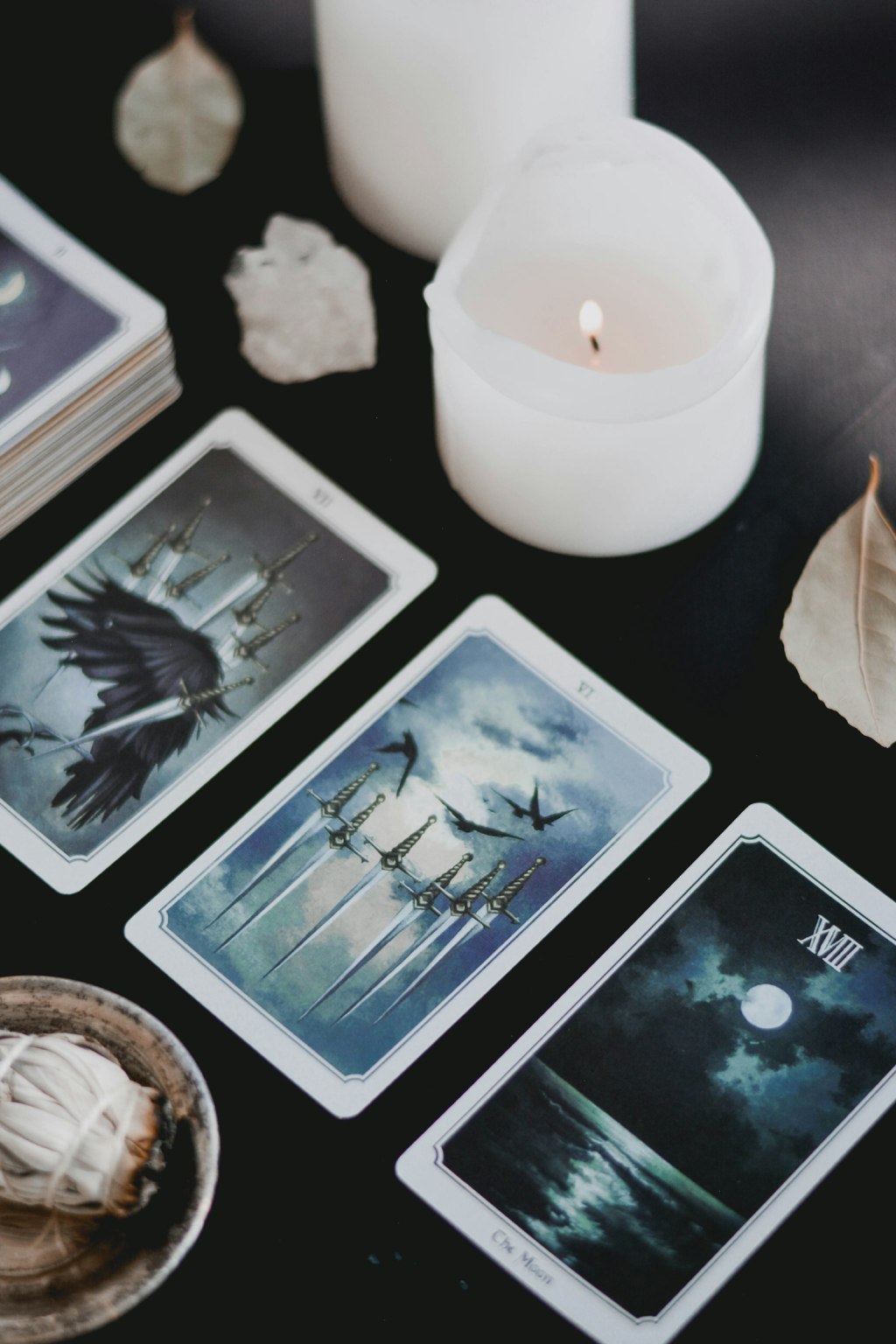
If you want to know how to read tarot cards, you can begin with one deck, one question and ten quiet minutes. Tarot is a set of 78 pictures, and a reading is the act of putting some of those pictures into a sentence about your situation. This guide covers why that works, what is in the deck, where it came from, a simple three-card reading you can do tonight, and the safety and ethics notes that tend to get skipped.
Why tarot reading works
Every card is a compressed story. The Tower shows a lightning-struck building, and almost everyone has an immediate reaction to that image before they know a single keyword. Each picture has collected associations over centuries of use, so when a card lands in a particular position in a spread, it is given a job, such as the past, the obstacle or the advice. Your mind then does the real work by matching the picture to your actual circumstances and noticing what it reacts to.
Shuffling takes the choice of image out of your hands, which stops you from steering towards the answer you were hoping for. So the mechanism has three parts: a random draw, structured positions, and a reader who has to translate the result into plain words. Tarot is a reflective tool. A good reading usually leaves you with a sharper question and a few options to consider, and it does not hand down a fixed verdict.
A short history of tarot
Tarot began as a game. Britannica dates the first decks to Italy in the 1430s, where a fifth suit of 21 illustrated trump cards and a card called the fool were added to an ordinary four-suit pack. The V&A describes tarot as originally a card game played for fun. Britannica places the first occult and fortune-telling use in France around 1780, and the V&A also dates it to the late 18th century.
In 1886, Arthur Edward Waite’s English translation of a book by the French occultist Eliphas Levi introduced tarot to Britain. In 1909 the Rider Waite Smith deck was first published, with artwork by Pamela Colman Smith made under Waite’s direction. According to the V&A, it was the first deck to have fully illustrated number cards, which is why beginners can read every card in it straight from the picture.
What is in a tarot deck
A standard deck has 78 cards in two groups. The Major Arcana is 22 trump cards, numbered I to XXI with the Fool left unnumbered, and these tend to mark big forces and turning points. The Minor Arcana is 56 cards in four suits of 14, each with ten numbered cards and four court cards. Britannica lists the traditional suit associations, and the V&A notes the elements that readers commonly attach to them today:
- Wands (or batons): fire and action, traditionally linked to work and ambition.
- Cups: water and emotion, traditionally linked to love and relationships.
- Swords: air and thought, traditionally linked to conflict.
- Pentacles (or coins): earth and material life, traditionally linked to money and comfort.
Some Australian readers pair the suits with the seasons as they fall here, so Wands might suit the heat of a December afternoon. That is a personal choice, and nothing in the tradition requires it.
Choosing and getting to know your deck
A Rider Waite Smith style deck is the easiest place to start because every card shows a scene, and many modern decks borrow its imagery, so what you learn carries over. Many practitioners treat a deck as an ally with its own temperament, whether blunt or gentle, wordy or spare. Give yourself a week to get acquainted before you attempt any spreads. Draw one card each morning, describe what you see in three sentences before you look up any meaning, and write down what you noticed and what the day brought.
A grimoire is a good home for these notes. Between sessions, keep the deck wrapped in a cloth so the cards stay dry and flat.
How to read tarot cards: a simple three-card reading
Sit somewhere you will not be interrupted, clear a flat surface and, if you like, lay down a cloth, which also protects the cards. Decide on your question before you touch the deck, and shape it so it opens the situation up. Ask “What do I need to understand about my work this month?” instead of “Will I get the promotion?” so the cards have something to answer. Shuffle in whatever way feels comfortable until it feels finished, then draw three cards and lay them left to right as the situation, the challenge and the advice. Before you open any guidebook, look at each card in turn and say aloud what you see: who is in the picture, what they are doing, what the mood is, and which way they face. Then read the three as one sentence, letting the second card speak to the first and the third respond to both, so you end up with something like “this is where I am, this is what is pulling at me, and this is a way through”. Only after that, check a guidebook for the traditional meanings and see where your reading agrees with them and where it wanders. Write the date, your question, the cards and your interpretation in your notebook, and return to the entry in a few weeks to see what actually unfolded. When you are finished, thank the deck, wrap it and put it away.
Common beginner mistakes
The first is memorising keywords before you have looked at the pictures, which leaves you reciting instead of reading. The second is asking the same question again and again until the cards say what you want, which defeats the random draw. The third is reading reversed cards too soon. Britannica notes that an upside-down card shifts the meaning, but it is sensible to leave reversals out until the upright cards feel familiar. The last is treating a reading as a prediction of fixed fate. Cards describe patterns and options, and what you do next is still yours.
Safety and ethics
- Candles: if you light one, use a stable holder on a heatproof surface well away from the cards, cloth, hair and loose sleeves. Never leave a flame unattended, keep it out of reach of pets and children, and snuff it when you finish. A battery tea light gives the same mood with no risk to your deck.
- Incense or smoke: use a proper holder with an ash catcher and open a window. Ash and hot embers can scorch cards and fabric.
- Big decisions: a reading is not a substitute for medical, legal, financial or mental health advice. Use it to reflect, then take the decision to a qualified professional.
- If a reading rattles you: stop, put the deck away and talk to someone you trust. You do not have to finish a spread.
- Reading for others: get their consent, keep to the questions they ask, and never predict illness, death or pregnancy. Frame what you see as options and patterns, and leave out the private lives of people who are not in the room.
Where to go from here
Once the three-card spread feels comfortable, try a five-card layout, or spend a month working with a single suit to learn its character. If you enjoy divination tools, the beginner’s guide to using a pendulum covers a quick way to ask yes or no questions. The V&A’s history of tarot cards is also worth a read for its images of historic decks, which show how much the pictures have changed while the structure stayed put.


Leave a Reply