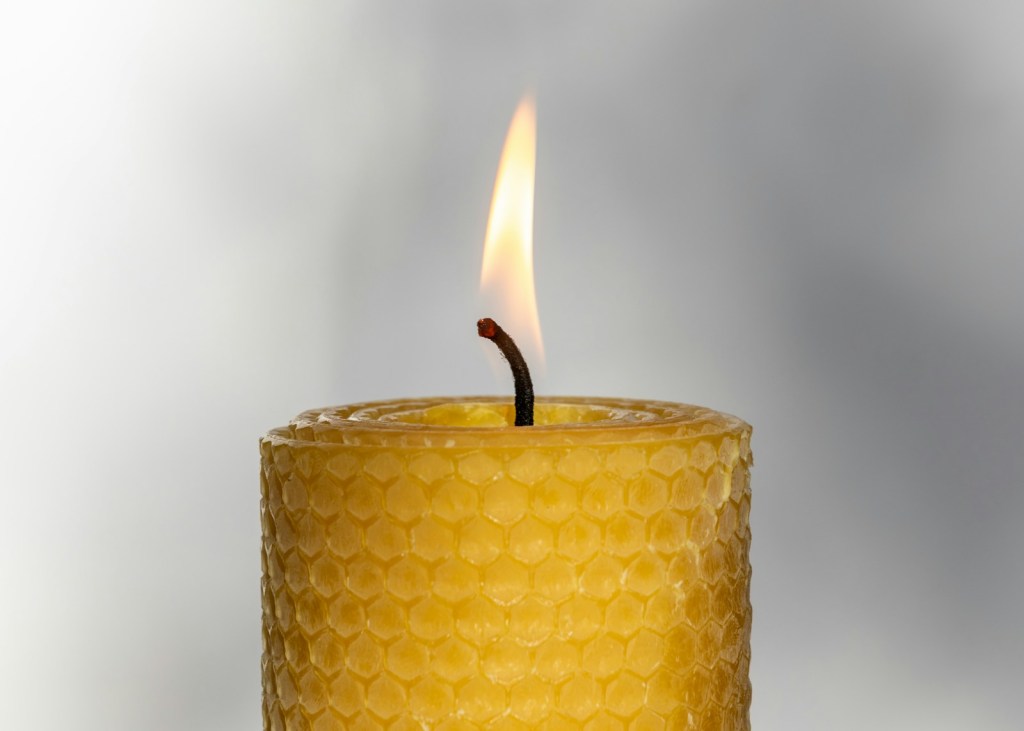
Rolled beeswax candles are the easiest candle you can make for ritual, and they suit the weeks around the 9 November new moon well, because you can make one in an evening and have it ready to light. You need no melting pot, no moulds and no hot wax, just a sheet of beeswax, a length of wick and your hands.
Why a handmade candle works for spellwork
A bought candle is a finished object. A candle you roll yourself carries your attention from the first minute, because every stage of the making is slow and physical. That is the mechanism behind most craft-based magic: the making is the first half of the working, and the burning is the second. When you light it later, you are lighting something you already spent time with.
There is also a practical reason witches have always made their own candles. A candle is a timer. It gives a working a start, a middle and an end, and it keeps your attention in the room for as long as it burns. According to Britannica, candlesticks from Egypt and Crete date to at least 3000 BC, and by the European Middle Ages tallow candles were in wide use, with 71 chandlers named in a Paris tax list of 1292. Candles are old, ordinary tools, which is part of why they carry so much weight in ritual.
What you need
Beeswax sheets are sold in craft kits and by beekeeping and craft suppliers, usually with the right wick included. Most makers recommend a cotton or dipped wick sized for the diameter of the finished candle, so follow the guidance that comes with your sheets. You will also want baking paper to roll on, a hairdryer, a ruler and scissors, and a heatproof holder for burning.
Beeswax is the ally here. It is dense, faintly sweet-smelling and slow to give way, and it suits workings about steadiness, patience and tending something over time. It also keeps the project honest, since a sheet of wax will not be rushed. If you want to add dried herbs or an anointing, you can do that after rolling, using the method in our guide to dressing a candle.
If you are after ritual supplies from overseas, Sage Goddess (sagegoddess.com) is one US option for candles and wax. Australian biosecurity rules and shipping costs apply to US orders, so check the Department of Agriculture guidance first. A local craft or beekeeping supplier is usually simpler for beeswax.
A note on timing in the southern hemisphere
Late spring is a comfortable season for this project. Beeswax sheets are easier to handle in a warm room, and rolling is gentler when the wax is only slightly softened. Keep finished candles out of hot cars and off sunny windowsills in summer, since any candle can sag in heat. Cafe Astrology’s November 2026 overview is a good place to confirm the moon dates for your timezone. For the working you might use the candle in, our Scorpio new moon guide covers the 9 November new moon.
How to roll the candle and light it for a working
Work at a clean table on a sheet of baking paper, with the wick trimmed a little longer than your sheet is wide. Using a hairdryer on its lowest setting, warm one short edge of the sheet only until it just turns flexible, keeping the dryer moving and a hand’s width away so the wax never melts or smokes. Lay the wick along that warmed edge and fold the wax over it, pressing gently so the wick is held without being squashed, then roll the first turn as tightly as you can, because that first turn decides how evenly the candle burns. Continue rolling slowly, warming the sheet lightly as you go if it stiffens, and keep the edges lined up so the sides stay straight. As you roll, say quietly what the candle is for, in one plain sentence such as “this will hold my attention on one thing at a time.” At the end, warm the loose edge briefly, press it flat against the candle and roll the finished candle back and forth on the baking paper to seal it. Warm the base a little and press it onto the table to make it flat, then trim the wick to about 6 mm (a quarter of an inch). Leave the candle to rest for a day if you can. When you are ready to use it, stand it in a heatproof holder on a stable surface, light it, state the intention once aloud, and sit with it for as long as you planned, staying in the room the entire time. Put the flame out with a snuffer or a spoon, never your fingers, trim the wick again before the next burn, and note in your grimoire what you made and what you used it for.
Caring for the candle
Keep the candle standing straight while it burns so it melts evenly. If one side runs faster, you can gently tilt or rotate it while the wax is still warm, taking care not to touch the flame or hot wax. Trim any uneven wax once it is cool. Store finished candles flat or upright in a cool, dry drawer, away from direct sun, where they will not be squashed.
Safety
Never leave a burning candle unattended, and keep it clear of curtains, paper, dried herbs and anything that catches easily. Use a stable, heatproof holder and keep hair and loose sleeves away from the flame. Keep pets and children out of the room or well back from a lit candle, and store spare wax and wick out of their reach.
Use the hairdryer on low and keep it moving, because overheated wax can soften suddenly or smoke. Do not heat wax with a naked flame. Keep water away from a burning candle and never use water to put out hot wax. If you react to bee products, skip beeswax and ask a supplier about another wax sheet. I have not verified the exact melting point or burn time of every brand of beeswax sheet, so follow the instructions that come with yours.
This is a craft and ritual practice, not a treatment for anything. If a working feels like it is covering something heavy, talk to a qualified professional or someone you trust.
If you want a beginner-friendly source of candles and ritual basics for your altar, The Spiritual Toolbox is worth a look.


Leave a Reply