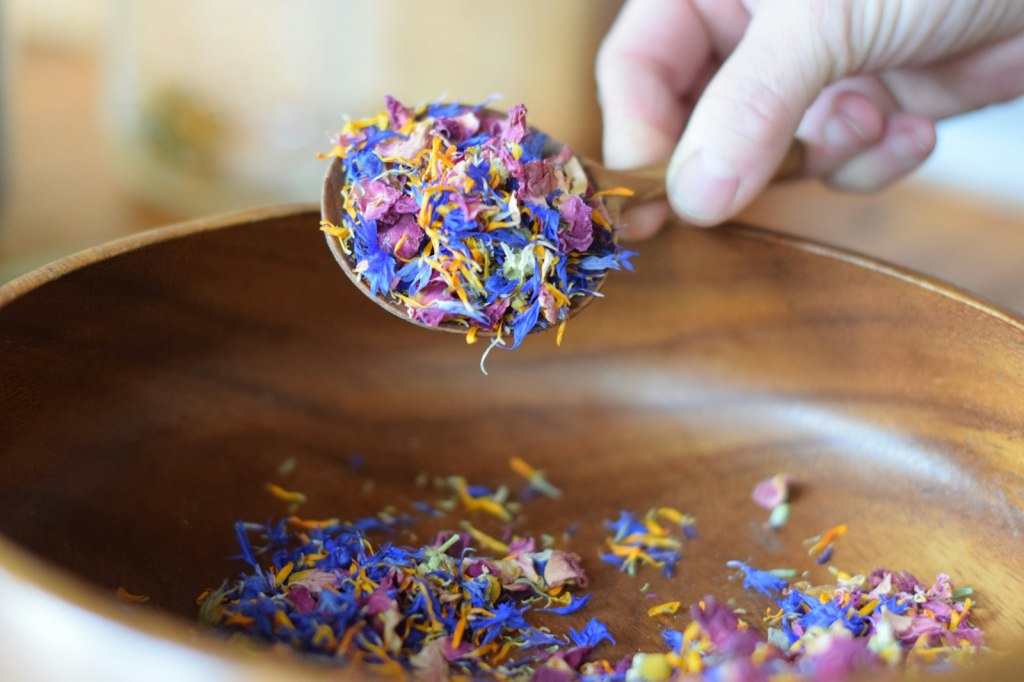
Learning how to make ritual bath salts is one of the easiest crafting projects a practitioner can take on, because the whole job is mixing a few dry ingredients in a jar. The payoff is a ready-made tool for the moments when you want to mark a change, such as the end of a long week, the start of a working, or the turn of a moon phase. With the Scorpio new moon arriving on 9 November 2026 and a warm southern spring around us, this is a good time to build a batch.
Why a Ritual Bath Works
A ritual bath works because it is a clear threshold. You take off the clothes you wore all day, you step into a contained space, and the body registers that something different is happening. Water, warmth and scent give your attention one place to land, which is most of what any ritual setting is for. The practice does not need a physical claim attached to it. It is a deliberate boundary between one state and the next, and the salts are the marker you choose for that boundary.
Salt has a long folk reputation as a protective and purifying material, and many traditions use it at doorways and in cleansing work. I treat it as an ally with a firm character: dry, preserving, blunt. Herbs are the softer voices in the blend. Lavender is gentle and steady, rose is warm and a little vain, and rosemary is brisk and clear. Choosing them is a relationship, and you can listen for which ones suit the job.
The Salts: What You Are Working With
The base of most homemade bath salts is Epsom salt, which is hydrated magnesium sulfate. Britannica notes that the mineral springs at Epsom gave the salt its name, and it lists the formula as MgSO4 for the common form of magnesium sulfate. It dissolves readily in warm water and has little scent of its own, which makes it a good blank page for herbs.
Many people add a smaller share of coarse sea salt for texture and for the traditional associations of sea salt in cleansing work. Keep the sea salt coarse rather than fine, since fine salt compacts and clumps in a jar. Epsom salt is sold in Australian supermarkets and pharmacies, and sea salt is in any pantry aisle, so you do not need to order anything for the base.
Choosing Your Herbs
Use dried herbs that are sold for culinary or cosmetic use, and use them in small amounts. Three reliable choices for a cleansing and reset blend are lavender buds, rose petals and a little rosemary. They are gentle, widely available and well known to most households. If you grow your own, dry them fully before use, because any remaining moisture will encourage mould in the jar.
If you want to order dried herbs in bulk, Mountain Rose Herbs is a US supplier of bulk herbs, and Sage Goddess is another. Both ship from the United States, so Australian biosecurity rules and shipping times apply to any order, and the Department of Agriculture is the place to check what can be imported. Buying from a local herb shop or health food store avoids the question entirely.
How to Make Ritual Bath Salts
You will need a clean, dry glass jar with a tight lid, a dry mixing bowl and spoon, two cups of Epsom salt, half a cup of coarse sea salt, two tablespoons of dried lavender buds, two tablespoons of dried rose petals and one teaspoon of dried rosemary leaves. Make sure every utensil is completely dry before you start, since salt pulls moisture from the air and from any damp surface. Pour the Epsom salt and sea salt into the bowl and stir slowly while you decide what the bath is for, whether that is release, rest, a clean slate or a quiet mind before sleep. Say the purpose aloud once, in plain words, so the salt hears it. Crush the rosemary lightly between your fingers, add it with the lavender and rose, and fold the herbs through the salt until the colours are even. Hold your hands over the bowl for a few breaths and thank the herbs for their part in the work, then spoon the blend into the jar, seal it and label it with the purpose and the date. For a bath, dissolve about half a cup in running warm water before you get in, or tie the same amount in a small muslin or cotton bag and hang it under the tap so the herbs stay out of the drain. Keep the bath short and warm rather than hot, which is more comfortable in a southern spring anyway, and finish by letting the water drain with your intention named once more.
Timing It With the Moon
The blend keeps well, so you can make it any day and use it when the moment arrives. If you like to work with the sky, a good rhythm is to mix the salts in the days before a new moon and take the first bath on the night itself. The new moon in Scorpio exact on 9 November 2026 at 6.02pm AEDT, at 16 degrees 53 minutes of Scorpio according to Cafe Astrology, suits themes of release and renewal. Our guide to the Scorpio new moon on 9 November covers the timing and intention ideas in more depth. The astrology here is interpretation, and the date and time are the astronomical part you can check.
If you would rather add an oil, make your own first. Our guide to making anointing oil from a dried herb infusion is a better fit for ritual use than adding strong essential oils straight into a tub.
Safety
Do a patch test first. Mix a pinch of the blend into warm water and touch it to the inside of your forearm, then wait a day for any redness or itch before bathing in it. Stop using the blend straight away if your skin reacts. People with sensitive skin, open cuts, a skin condition, a health condition, or who are pregnant should check with a doctor or pharmacist before using any bath additive. Epsom salt is a medicinal salt in some forms, so it is not for eating, and the blend should never be swallowed or fed to anyone.
Keep the blend and the bath water away from pets and young children. Pets may drink bath water, and cats in particular react badly to many essential oils, so this recipe leaves them out on purpose. Do not add undiluted essential oils to a bath, because they float on the surface and can irritate skin. Loose herbs can block drains, so use a muslin bag or a fine strainer, and never use the blend in a spa bath with jets or filters, since petals and salts can damage the equipment. Avoid herbs you cannot identify with certainty, and do not substitute foraged plants for ones sold as safe for use on skin. Wet tubs are slippery, so use a mat, keep candles well away from towels and curtains, and never leave a flame unattended in the bathroom. Rose petals and lavender can also stain light grouting and some tubs, so rinse well afterwards.
Store the finished jar in a cool, dry cupboard out of the sun. If you see damp clumps, mould or an off smell, throw the batch out and start fresh. A jar kept dry and tightly sealed will usually last several months, though the scent of the herbs will fade over time, which is your cue to make another batch. Treat the whole practice as a ritual aid and a bit of comfort, and leave health decisions to a health professional.


Leave a Reply