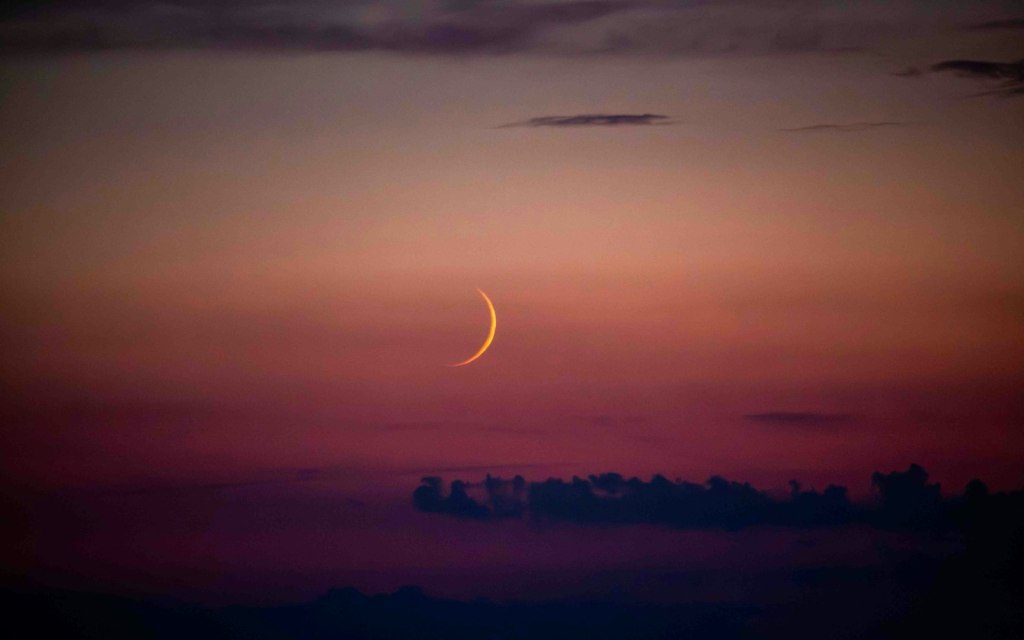
The New Moon in Sagittarius arrives on Wednesday 9 December 2026 at 11:52am AEDT, with the Sun and Moon together at 16 degrees 57 minutes of Sagittarius. It is the last new moon of the calendar year, and it falls four days before Jupiter, the traditional ruler of Sagittarius, stations retrograde in Leo. That timing gives this lunation a clear job, which is to pick one aim and send it somewhere realistic. The working below does that with a sheet of paper and a pen.
New Moon in Sagittarius 2026: the timing at a glance
The exact moment is 00:52 UTC on 9 December. That is 11:52am AEDT in Sydney, Melbourne and Canberra, 10:52am in Brisbane and 8:52am in Perth. Cafe Astrology lists the new moon as 7:52pm on 8 December in US Eastern time, so if you see the 8th in an American source, it is the same instant.
The Moon is in Sagittarius from about 2am AEDT on 8 December until about 2pm AEDT on 10 December, which gives you a generous window. The next Full Moon is in Cancer at 12:28pm AEDT on 24 December.
What is happening in the sky
At a new moon the Moon’s lit half faces the Sun and its dark half faces us, so it rises and sets with the Sun and cannot be seen. NASA’s moon phases page adds that the Moon does not usually pass directly between Earth and Sun at this point, because of the tilt of its orbit, which is why a new moon does not usually cause an eclipse. The first thin crescent tends to show a day or two later, low in the western sky after sunset, and for a few evenings it follows the Sun down soon after.
Sagittarius the sign and Sagittarius the constellation are different things. The tropical zodiac used by most Western astrologers gives the sign as the 240 to 270 degree slice of the Sun’s yearly path, counted from the March equinox point, which runs from roughly 22 November to 21 December. The Sun itself is in front of the constellation Ophiuchus from about 30 November to 18 December, and only then moves in front of the stars of Sagittarius. Astrology works with the sign as a symbolic map, so both statements can be true at once.
What astrologers say about a Sagittarius new moon
Everything in this section is astrological interpretation and not astronomy. Sagittarius is a mutable fire sign, drawn as an archer who is also a centaur, and it is traditionally ruled by Jupiter. Its themes are long-distance travel, study, belief, publishing and plain speaking. A new moon is read as a seed point, the start of a cycle that NASA puts at about 29.5 days from one new moon to the next, so astrologers treat the sign as the flavour of whatever you begin now.
This lunation has a few features worth knowing. Mercury entered Sagittarius on the evening of 6 December (AEDT), so the whole stretch is talkative and opinionated. Cafe Astrology’s listing for Mercury in Sagittarius also has Mercury square Mars at 4 degrees of Sagittarius and Virgo, exact in the early hours of 10 December (AEDT), about thirteen hours after the new moon. The usual reading is sharp replies and arguments over small details, so draft the message and sleep on it.
The bigger feature is Jupiter. It sits at 27 degrees of Leo and is almost standing still. Cafe Astrology gives the retrograde station as 27 degrees 01 minutes of Leo, which lands on 13 December AEDT once the US time is converted, and the retrograde runs until mid-April 2027. Because Jupiter rules Sagittarius, many astrologers read this as a new moon that wants a big aim and then asks you to review it before you rush it.
The southern hemisphere angle
Northern writers frame Sagittarius season as a dark-of-year push towards the solstice. Down here the same weeks are early summer, with long light, school holidays, the run to Christmas and a calendar that fills faster than anyone planned. The Archer’s images of distance and open road feel literal when many households are about to drive somewhere with the boot full of beach gear, so this is a good month for aims that involve going somewhere or learning something.
Because the new moon lands at midday, there is nothing to see, and the useful window is the Sagittarius Moon from the early hours of 8 December to the afternoon of 10 December. For wider context, the Sagittarius season post covers the Sun’s move into the sign on 22 November, and the December 2026 astrology guide lays out every date for the month.
A paper arrow working for the new moon in Sagittarius
The mechanism comes first. An archer needs a target at a known distance, and a shot with no target is just noise. Sagittarius new moons tend to produce huge, vague wishes such as “travel more” or “be wiser”, and with Jupiter about to turn retrograde, vague aims are the ones most likely to stall. So this working splits the aim into a far mark and a near step. Paper takes ink and holds it, a pen leaves a mark you cannot argue with later, and a folded dart gives the aim a flight path you can actually watch. Treat the paper as an ally that will carry whatever you give it, and give it something specific.
You will need a sheet of A4 paper, a pen, and a clear indoor space of a few metres with no pets, people or breakables in the way. The best time is the evening of 9 December or the morning of 10 December, while the Moon is still in Sagittarius. Here is the working as one continuous piece. Sit at a table with the sheet in front of you and write the far mark across the top, one plain sentence naming something you want to be true by mid-April 2027, when Jupiter turns direct, and make it something you could check, such as a course finished, a trip booked and paid for, or a draft sent out. Underneath, write the near step, one action you can complete within seven days, small enough that you will really do it. Fold the sheet into a simple paper dart with the writing on the inside, press the folds flat with your thumbnail, and stand at one end of your clear space. Say the far mark aloud once, in ordinary words, as a statement of intent, then throw the dart gently across the room. Walk over and pick it up wherever it landed, without reading anything into the spot, and set it on your desk or tuck it into your grimoire. Do the near step before the Moon leaves Sagittarius on the afternoon of 10 December if you can, or within the week. On 13 December, when Jupiter stations, unfold the dart and read both lines again, and adjust the far mark if the review shows it needs adjusting. Open it once more in mid-April and see what held.
Safety notes
This working has no flame on purpose. Paper in flight and a lit candle do not belong in the same room, and December is fire season in much of Australia. Throw the dart gently, away from faces, pets, glass and fans, and keep children supervised if they join in. Use an ordinary pen, and keep pens, caps and paper away from pets that chew. If you take the throw into the garden, collect the dart afterwards so no paper is left as litter. This is a focusing practice and promises no particular outcome, so for decisions involving money, health or legal matters, speak to a qualified professional.
Using the weeks around the new moon
The Moon enters Sagittarius in the early hours of 8 December, the new moon is at 11:52am AEDT on 9 December, and Jupiter stations retrograde on 13 December. The Full Moon in Cancer at 12:28pm AEDT on 24 December is a natural checkpoint for the near step, and mid-April 2027 is the checkpoint for the far mark. Between those dates the useful discipline is small: keep one aim, check it on schedule, and let the rest of the month be summer.
Times above come from Cafe Astrology, which lists US Eastern time, converted to AEDT and cross-checked against other ephemeris sources. The moon phase facts are from NASA, and the constellation dates are from EarthSky’s tables of the Sun’s path. Exact minutes depend on your time zone, so confirm them for your city.


Leave a Reply