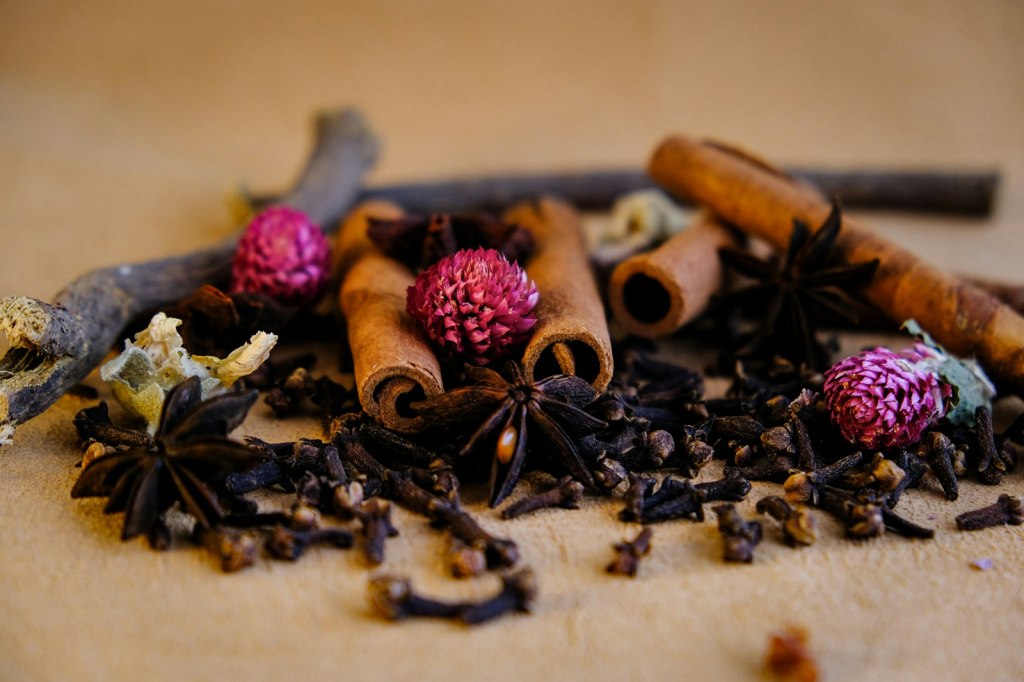
An orange and clove pomander is one of the oldest and simplest scent charms you can make, and it takes about twenty minutes. It is a firm orange pushed full of whole cloves, dried slowly until it turns hard, dark and fragrant, then hung over a doorway, tucked into a drawer or set in the middle of the table. With summer starting on 1 December and the festive season close behind, this is a good week to make one.
Where the pomander comes from
The word comes from the Latin pomum de ambre, meaning amber apple. The Victoria and Albert Museum notes that in England from the 1490s a pomander was a mixture of fragrant substances kept in a case of gold, silver, ivory or wood and worn around the neck or at the waist. Its owners believed it protected them against disease. One 17th-century silver example in the museum has compartments engraved with the names of ingredients such as rosemary, cinnamon and cloves.
The orange version is the humble descendant. Britannica records that by the 20th century, inexpensive pomanders were being made by encrusting an orange with whole dried cloves. I mention the old protective belief as history only. A pomander is a scented charm, and nothing here is a health measure.
Why an orange and clove pomander works as a charm
Start with the mechanism, because it tells you how to make a good one. The orange is the sweet, perishable centre. The cloves are dozens of small, hard points set close together around it. Practically, closely spaced cloves help the fruit dry out instead of rotting, which is why a thickly studded pomander lasts and a sparse one tends to spoil. Symbolically, you are building a ring of small guards around one thing you want to keep.
In animist terms, clove is a sharp, hot, boundary-keeping ally. It does not negotiate and it does not soften. Orange is a bright, generous sun-fruit, warm and welcoming. Together they suit work around hospitality and thresholds: clove is the guard, and orange is the guest being kept safe. Whatever you ask of the pomander, give it one clear job.
What you need
You need one firm orange with tight skin, as fresh as you can find, because soft or older fruit tends to mould before it dries. You also need more whole cloves than you expect, a toothpick or bamboo skewer, a thimble to save your thumb, a paper bag, and a length of ribbon or cord if you want to hang it. Ground cinnamon is optional. Supermarket oranges are often waxed, so wash the fruit in warm water and dry it thoroughly before you begin.
Whole cloves and cinnamon are easy to find in any Australian supermarket spice aisle. If you want a particular grade or an organic option, Mountain Rose Herbs is a US supplier, and Australian biosecurity rules and shipping costs apply to anything you order from overseas, so check the requirements first.
How to make an orange and clove pomander
Wash the orange, dry it well and hold it for a moment while you decide what this one is for: a welcoming house over summer, a guarded drawer of good linen, or a settled centre for the kitchen table. Say that purpose aloud once, plainly, because naming the job gives the charm its brief. Use the toothpick or skewer to pierce the skin, push in a clove until the head sits flush, and carry on in rows from the stem end, spacing each clove about 6 mm from the next, because the fruit shrinks as it dries and the cloves will draw together. Make each hole no deeper than the clove needs, and use the thimble if the skin is tough. Cover as much of the fruit as you can, since closely set cloves preserve the orange better than scattered ones, and speak quietly to each row as you finish it, telling it what it is guarding. When the fruit is covered, roll it gently in ground cinnamon to take up the juice that weeps from the holes, shake off the excess, and place it in a paper bag, never plastic, somewhere cool, dark and dry. Turn it every few days and leave it for two to six weeks, until it is shrunken, hard and feels hollow. Then tie it with ribbon and hang it over a doorway, set it in a bowl, or tuck it into a drawer or wardrobe. To close the working, hold the finished pomander, thank the clove and the orange for their part, and tell the pomander its job one more time.
Drying a pomander in humid Australian weather
Mould is the main way a pomander fails, and sticky summer weather makes it more likely. The cloves help the fruit dry, but a pomander left in warm, damp air will eventually grow mould. A paper bag allows airflow, and a cool, dry spot such as an airy cupboard or an air-conditioned room suits it better than a steamy kitchen or laundry. Check it weekly. If you see fuzzy growth, bin the whole thing and start again with a fresher orange.
If you would rather enjoy it fresh, display it during the day and keep it in the fridge overnight, then plan to retire it within a short time. For more on keeping air-dried material safe in humid weather, see our guide to how to dry herbs for spellwork.
Safety notes before you start
Pets come first. Cloves contain eugenol, and eugenol is the main toxic component of clove oil. Cats are the most sensitive, and dogs can also be affected. Hang your pomander well out of reach, keep loose cloves in a closed jar, and do not add clove essential oil to refresh an old pomander. If a pet chews or swallows cloves, call your vet straight away.
Whole cloves are a choking risk for small children, and skewers are sharp, so make this one at a table and not with little hands nearby. A pomander is for scent only, so do not eat it. Wash your hands after handling a lot of cloves and keep them away from your eyes. Dried fruit and spices should stay clear of candle flames and heaters. Throw out any pomander that develops mould.
Retiring your pomander
A dried pomander keeps its scent for a long while, then fades. When it does, thank it and let it go. Bury it in the garden under enough soil that pets cannot dig it up, or put it in the compost bin. Make a fresh one when the next season turns, and let the old one’s job pass to the new.


Leave a Reply