The Hexed Disney movie opens in Australian cinemas on Thursday 26 November 2026, and it puts witches at the centre of Walt Disney Animation Studios’ 65th feature. It is an original story rather than a sequel, which makes it the studio’s first of that kind in about three years. If you practise, someone will ask what you make of it. This post covers what is confirmed so far, why the “you were a witch all along” story keeps working on audiences, and a small practice to try once you leave the cinema.
Hexed release date in Australia and what we know
Disney lists the film as a cinema-only release first. The US opening is 25 November, the UK opening is 27 November, and Australian cinema listings, including Palace Cinemas, give 26 November for us. Disney says it will reach Disney+ some time after its cinema run. At the time of writing the Australian classification was still listed as to be confirmed, so check it before you book if you are taking children.
The story, per Disney’s own description, follows Billie, a teenager who has always felt she does not quite belong. She discovers she is a witch, is expelled after accidentally causing magical mayhem at her high school, and ends up in Hexe, a realm of other witches. There she and her cautious mother, Alice, have to solve family mysteries that could change the witching world.
Hailee Steinfeld voices Billie and Rashida Jones voices Alice. Jodie Foster plays Queen Celeste, the villainous witch queen, in her first Disney Animation voice role. Walton Goggins voices a wise-cracking three-eyed cat who guides Billie, Tracey Ullman voices an enchanted feather quill called Ms Quill, and Stephen Fry voices a magical journal named Elias Quire. Fawn Veerasunthorn and Jason Hand direct, with Josie Trinidad as co-director. We have not seen the film, so this is not a review, and we have left out plot details beyond what Disney has published.
Why the “discovering you are a witch” story works
It helps to understand the mechanism before judging the story. A teenager who feels out of place, then learns the strangeness was a hidden gift, answers a very old wish: to find that the thing which made you an outsider was a sign of something real. It works as a hook because belonging is the hardest thing to build and the easiest thing to long for. Magic gives the story a way to turn “I am too much” into “I am exactly enough, in the right company.”
Real practice rarely arrives as a sudden spark. Most practitioners describe a slow accumulation: noticing, trying small things, keeping what held and dropping what did not. The film’s mother and daughter pairing is interesting for that reason. Practice passed between generations tends to carry both skill and baggage, and the work often involves sorting which is which. Whether the film handles that well is something we will find out along with everyone else.
Screen witches and real practice
Films compress years into a montage and make results visible, loud and quick. Practice rarely looks like that, and it is fine to enjoy a glowing-hands scene without taking it as a method. The best screen witch stories tend to be about people and relationships, with the magic as a lens. We covered how the image has shifted over time in our guide to witches in pop culture.
There is a useful precedent in The Craft (1996). Its makers hired Pat Devin, a Wiccan priestess and officer of the Covenant of the Goddess, as a consultant, and The Wild Hunt’s retrospective on the film notes she was brought in to add verisimilitude to the ritual elements. Practitioners have long argued about how well it served them, and that argument is part of the film’s legacy. Any witch film is a conversation between entertainment and a living tradition, and it is reasonable to hold both at once.
The quill and the journal: the real tools behind the screen magic
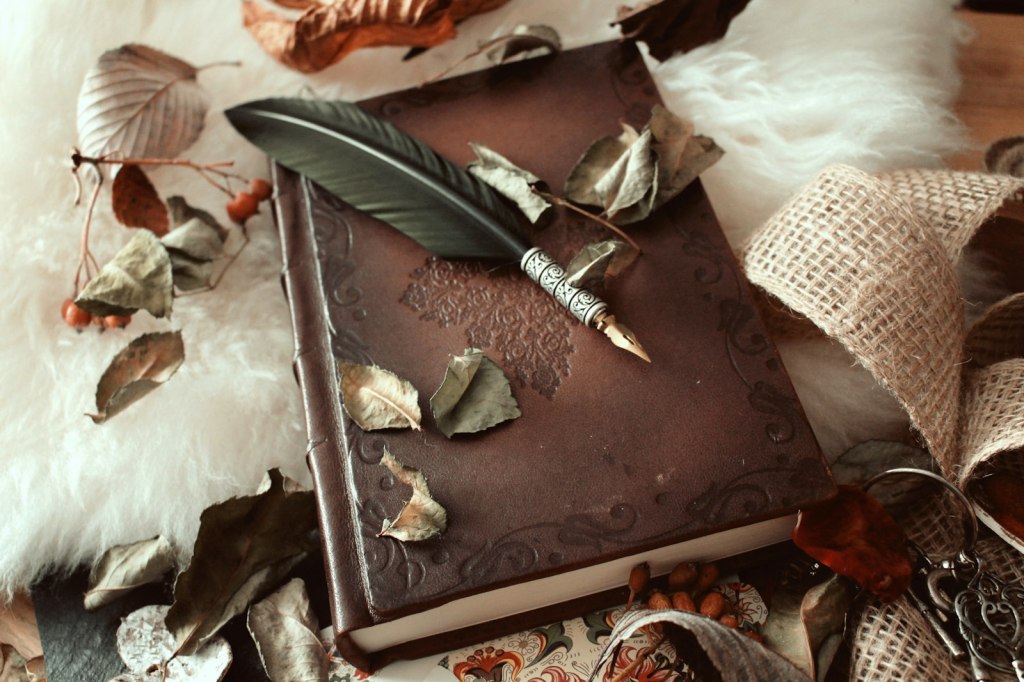
The detail that caught our attention in the cast list is that two of the main supporting characters are a quill and a journal. Animation can make anything talk, but the choice points at something true. Paper and ink are among the most reliable allies a practitioner has. A notebook has a character of its own: it holds what you give it without editing, and over months it shows you patterns you could not see from inside them. A good pen is an ally in the same way, because the act of writing slows you down enough to notice what you actually think.
That is the whole reason a grimoire earns its place. If you do not keep one yet, our guide on how to start a grimoire walks through a format you will actually use. It needs no special binding, no calligraphy and no rules about what goes in it.
A small practice for after the credits
You can try this the same night you see the film, or after any story that stirs something in you. Take a notebook and a pen you like the feel of, and sit somewhere quiet for ten minutes with the lights low but safe, with no candle needed. Write the date and, if you track it, the moon phase, noting that on 26 November the Moon is about a day past full. Then write three short things in your own words: the moment in the film that gave you a prickle on the back of your neck, what you think the character’s magic was really made of (attention, stubbornness, grief, courage, curiosity), and one small action this week in your own practice that borrows from it, such as tidying your altar, finishing the spell you keep postponing, or phoning the relative you have been avoiding. Read it back once aloud, close the book, and leave it alone until next week, when you check whether the small action happened. The purpose is to turn a borrowed feeling into a record you can use, so the film becomes a prompt for your own work rather than a replacement for it.
The sky the night before: Gemini full moon
Here is the astrology, kept separate from the astronomy. As an astronomical fact, the Full Moon falls at 1.53am AEDT on Wednesday 25 November 2026, which is 14:53 UTC on 24 November, and the Moon is in Gemini at that moment. As astrology, Gemini is the sign traditionally linked to words, writing, reading and conversation, so a full moon there is often read as a time when things said or written come into the open. That makes the following evening a fitting one for a story about a talking book and a quill, though you can take that as symbolism and nothing more. We went into the timing and a words-aloud working in our Full Moon in Gemini post.
A few sensible notes before you go
Films show magic with fire, smoke and spectacle, and the cinema is the right place for that. If a scene inspires you to try something at home, keep any flame in a proper holder on a heatproof surface and never leave it unattended, and skip anything involving herbs or oils unless you have checked them for pets, skin contact and allergies. Children’s films also tend to prompt questions, so if a younger family member asks whether magic is real, an honest answer is that people practise it in many ways and that the film is a story.
Whether Hexed turns out to be a thoughtful take on inherited magic or simply a fun family outing, it is a good excuse to talk about what you value in your own practice. See it, enjoy it, and write down what it stirs up.
Release dates and cast details are taken from the cited Disney and cinema listings and may change, so confirm session times with your local cinema.


Leave a Reply