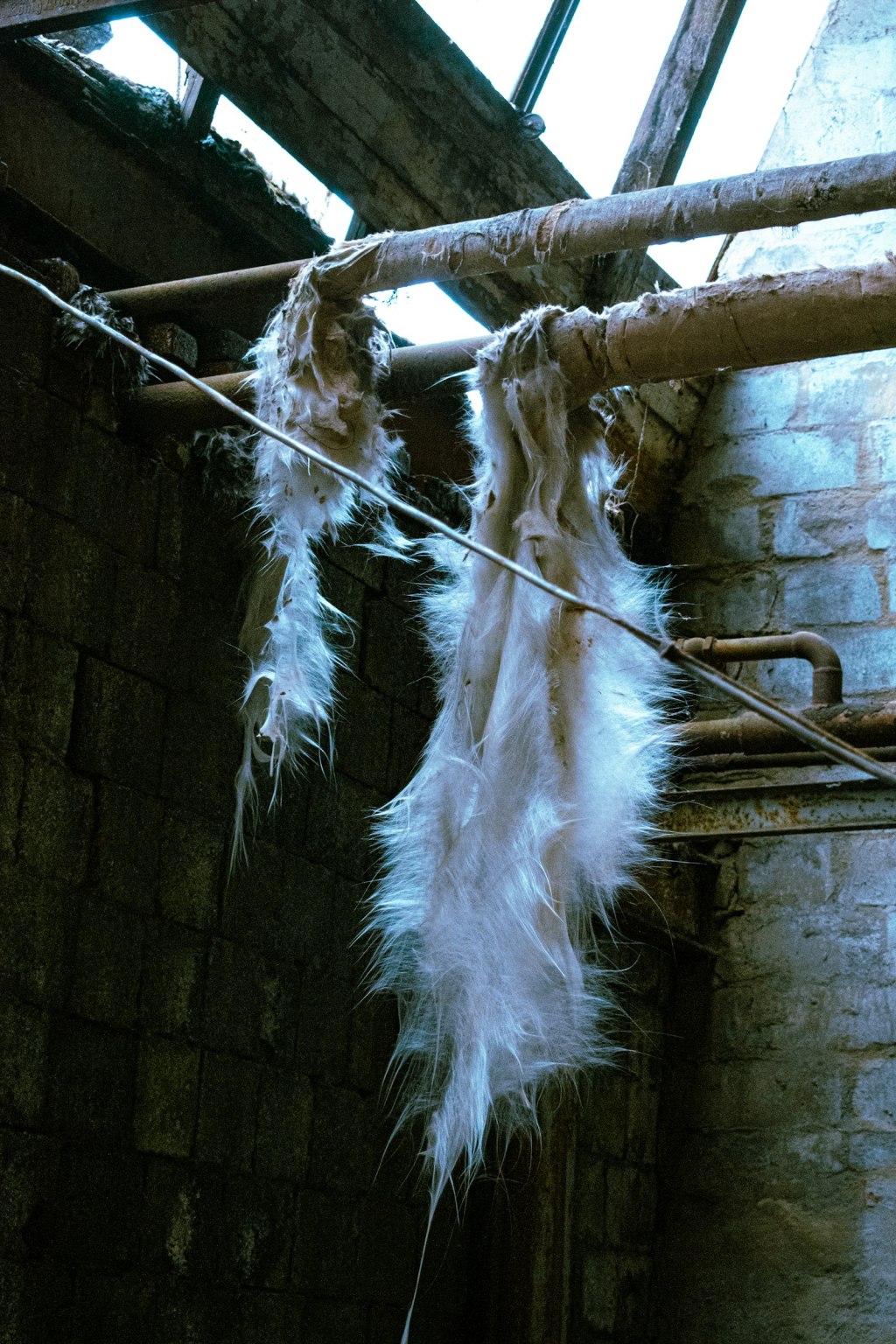
Learning how to make a witch’s ladder is one of the more satisfying cord projects in practical witchcraft, because the finished object is a record of your attention: a length of cord, a run of knots, and feathers or beads fixed in place one at a time. It also has a stranger history than most people realise, and knowing that history changes how you make one.
Where the witch’s ladder actually comes from
The best-known historical example is a rope with feathers threaded through it, found in the roof space of an old house in Wellington, Somerset, when the house was demolished around 1878 or 1879. According to research published by the Pitt Rivers Museum, it was found alongside six brooms and an old chair. The workmen reportedly decided the chair was for witches to rest in, the brooms were for riding, and the rope was a ladder for crossing the roof. That is where the name comes from.
The first published account appeared in the Folk-Lore Journal in 1887, written by Dr Abraham Colles. Other folklorists then offered theories. J.G. Frazer suggested it might have been used to draw milk away from a neighbour’s cows, based on traditions from Scotland and Germany. Charles Leland wrote from Tuscany about a feathered garland used in death curses, which is a different object from the Somerset find.
The story gets more interesting from there. When the anthropologist Edward Burnett Tylor showed the rope at a scientific meeting in Manchester in September 1887, two people in the audience said it looked like a sewel, a feathered line held up to turn deer back during a hunt. Sabine Baring-Gould put a witch’s ladder into a novel in 1893, then told Tylor in a letter that the detail about sinking it in a pool so the ill wishes could escape was his own invention. A woman locally reputed to be a witch suggested the Somerset rope was simply a string of feathers used to frighten birds off a row of peas.
The object itself is about one and a half metres long and was donated to the museum in 1911. The museum’s own researcher notes that no other old witch’s ladder has ever been recorded, so much of the modern tradition may trace back to this single find. The Museum of Witchcraft and Magic also catalogues modern ladders, including one made of three threads in white, gold and pink with tufts of coloured fluff knotted in. The practical reading is simple. The historical case for the ladder as a curse device is thin, and what is well documented is that practitioners have made it their own.
Why a witch’s ladder works
Before the how, the why. A knot is a decision made physical. You cannot tie one without slowing down, and you cannot tie nine in a row without your attention settling on a single purpose. The cord becomes a counting device, so your mind is free to hold the intention while your hands keep the tally. Each knot is a small, repeatable action you can return to, and the finished ladder hangs where you see it daily, which keeps the purpose in front of you. That is the mechanism: focused repetition, then a physical anchor that keeps calling you back to the work.
In an animist-relational practice, the materials are allies with their own character. Cotton is plain and willing. Wool is warm and holds on. Linen is dry, strong and a little stubborn. A feather belonged to a bird and still carries that quality of lightness and movement. Choosing your materials is part of the conversation, so pick what you would be glad to work beside.
Materials for a simple witch’s ladder
- Three lengths of natural cord or yarn, about one metre each (cotton, wool or linen)
- Nine feathers, bought as cleaned craft feathers or from domestic poultry
- A few beads with holes large enough for your cord, optional
- Sharp scissors
- A hook or nail to hang the ladder from while you work
Safety and Australian rules for feathers
Feathers are the one material here that needs real care in Australia. All native Australian birds are protected, and the Arts Law Centre explains that possessing feathers of protected species can be an offence in New South Wales without a licence. Other states have their own rules, so check with your state wildlife agency before you collect anything from a bush walk, even a feather you find on the ground. The simplest path is to buy cleaned craft feathers or use feathers from domestic poultry such as chickens.
Be careful about ordering feathers from overseas. Feathers and goods made from them are regulated under Australian import conditions, so check the Department of Agriculture biosecurity rules before you buy.
A few other points. Raw poultry feathers can carry dirt and mites, so wash them in warm soapy water, rinse and dry them completely before use. Beads and loose feathers are a choking hazard for small children, and cats and dogs will chew a dangling cord, so hang the finished ladder well out of reach. Keep it away from candle flames and heaters, because natural fibres and feathers burn easily. Finally, leave hair out of it. Some historical accounts describe a person’s hair braided into the cord, and using anyone’s hair without their agreement is a line this site does not cross. This guide covers a ladder for your own focus, protection or wish. The old curse stories are folklore, and they are not part of this project.
How to make a witch’s ladder, step by step in one working
Choose a single purpose before you touch the cord and say it aloud in one plain sentence, such as steady focus through a busy December or a calm home over summer. Knot your three lengths together at the top, leaving a small loop for hanging, and hang the loop from your hook so both hands are free. Braid the three strands loosely and evenly, saying your sentence quietly as you go, and stop about a hand’s width from the bottom. Tie the first knot by making a simple overhand knot in the whole braid, pull it snug, and thread the first feather through the braid just above the knot so the quill sits firmly between the strands. Repeat for each knot, one at a time, adding a feather at every knot until you have nine, and slide a bead onto the braid between knots if you want a longer ladder or a place to rest your fingers. Say your sentence once for each knot and give each feather a moment of thanks as it goes in, treating the bird’s lightness as a partner in the work. Finish with a final knot at the bottom, trim the loose ends neatly, and say your sentence a last time with the ladder held in both hands. Hang it where you will see it every day, and when your purpose is met, thank the materials and take the ladder apart.
Timing your witch’s ladder in the Southern Hemisphere
Timing is optional, because a cord project can be made any day you have a quiet hour. If you like to work with the sky, late spring is a good moment for a ladder that carries you into summer. The Full Moon in Gemini on 25 November (AEDT) is an easy marker for finishing one, and our guide to the 25 November Full Moon covers the timing in detail. Gemini is traditionally linked with words and communication in astrology, which is an interpretation and not an astronomical fact, so a ladder for clear speech suits that week well.
Caring for and retiring your ladder
A ladder is a working object, and it has a natural end. When the purpose is met, untie the knots one by one, thank each material, and put the natural cord in the compost. Do not drop it into a creek, dam or the ocean. Beads and feathers do not belong in waterways, and the Baring-Gould pool scene was fiction anyway. If you want a shorter cord project first, the three-knot cord working uses the same principle with one cord and three knots.
The witch’s ladder has had a long second life since a Somerset attic gave it its name. Make yours with clean materials, a clear purpose and a bit of patience, and it will do what the best cord work has always done, which is keep your attention where you put it.


Leave a Reply