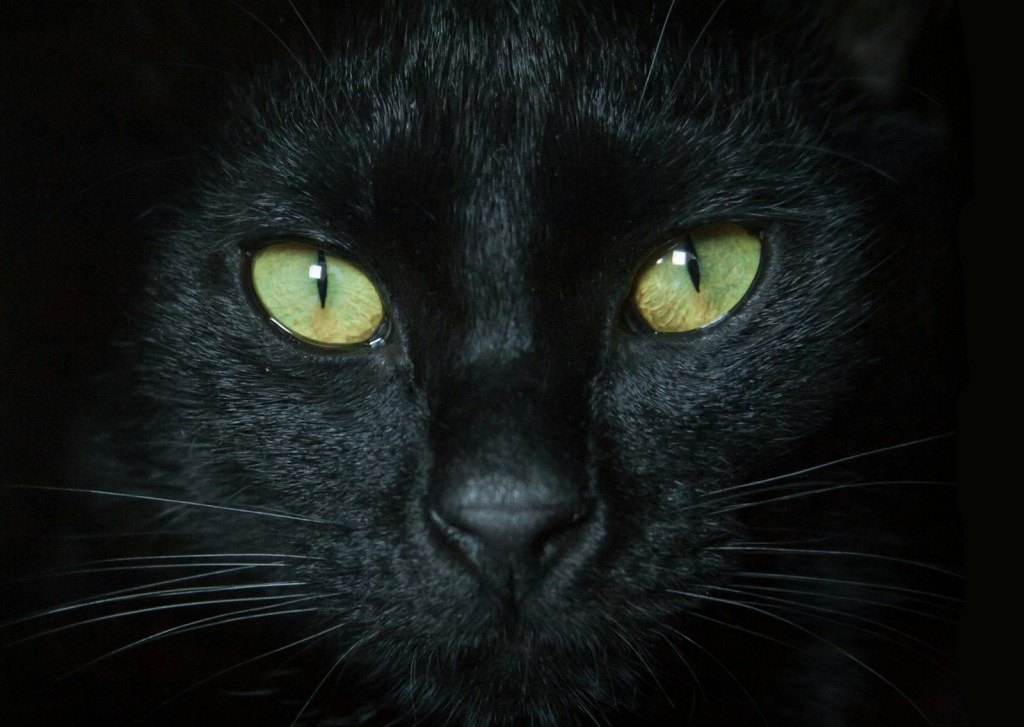
A witch’s familiar is, in the old sources, a spirit that took animal form and served a witch, and in modern practice it usually means a much gentler thing: a pet or wild visitor you feel a working bond with. Those two meanings sit a long way apart, and knowing the gap makes you a better practitioner and a better keeper of animals.
What a witch’s familiar meant in the historical record
Britannica defines a familiar as a small animal or imp, in Western demonology, kept as a witch’s attendant and said to take shapes such as a toad, dog, insect or black cat. It was a belief held by accusers. Nobody was keeping a spirit cat on the lounge, and the idea was a charge, not a lifestyle.
National Museums Liverpool notes that confessing to a familiar was very common among accused witches in England. Its examples include a cat called Satan in the 1566 case of Agnes Waterhouse, ferrets in the 1582 St Osyth trials, and dogs, mice and rats in other cases. Under interrogation, people described animals in terms the court expected to hear.
The same museum page records that the self-styled Witchfinder General, Matthew Hopkins, treated the naming of familiars as proof they existed, citing names such as Pyewacket, Grizzel Greedigut and Vinegar Tom. The Museum of Witchcraft and Magic holds a reproduction of a woodcut showing Hopkins with two Manningtree, Essex, women and their familiars. Its founder, Cecil Williamson, wrote that most of the animals were some pet animal. That is his reading, not a contemporary record, and it is worth holding loosely.
For the wider context of how these accusations played out, our piece on the Salem witch trials covers the myths and the real numbers.
Why the idea of a familiar still works
Here is the mechanism. Ritual work depends on attention, and animals are very good at pulling attention into the present. A cat who settles beside your altar, or a dog who sits at the door while you work, gives you a living anchor for the moment. You slow down because they do. The bond has a daily rhythm of feeding, play and rest, and that rhythm is a ready-made practice of care.
Pop culture has done the rest. Black cats, ravens and toads turn up on screen as shorthand for a witch, which we looked at in witches in pop culture. The modern familiar is a mix of that imagery and real affection for animals.
Modern ways people understand a familiar
Practitioners use the word in a few different ways. Some mean a household pet they feel close to. Some mean a wild animal that keeps showing up, like a magpie on the fence or a possum on the roofline. Others treat a familiar as a spirit relationship with no physical animal at all. None of these is the single correct one, and there is no test or certificate.
One honest caution: an animal cannot consent to a role in your practice, and it has its own needs. If you find yourself reading meaning into every flick of a tail, step back. Your pet is allowed to be just a pet, and that is a good outcome.
Building a bond with your familiar, safely
The working below is an acknowledgement, not a binding. It asks nothing of the animal. Choose a quiet evening when your pet is already relaxed and fed. Sit near them without crowding, with a small glass of plain water and a notebook. Breathe slowly until you notice your own pace settle, then say aloud, in your own words, what you appreciate about having this animal in your life, and that you will keep them fed, safe and well. Offer a favourite treat or a few minutes of the play they like best, whichever they choose. If they leave, let them go, and write down what you noticed, including nothing at all if that is what happened. Repeat it whenever it suits you both. No candle, smoke or oil is needed, and for most homes it is better without them.
Safety: keeping animals well around your practice
Animals share your space, so a few rules matter more than any technique. Never leave a lit candle or burning incense where a pet can reach it, and put flames out before you leave the room. Cats in particular jump onto altars, so keep tools stable and well back from edges.
Many herbs, oils and incense smokes are a concern around pets. Essential oils are widely reported by veterinary sources to be risky for cats, and some common plants and herbs are toxic to dogs and cats. Do not diffuse, burn or apply anything to an animal without checking with your vet first. Keep crystals, small charms and cord out of reach, since they are choking and swallowing hazards. Never put anything on, or tie anything to, an animal for ritual purposes. Wild animals should be watched and enjoyed, never fed or handled for the sake of a working, and in Australia that includes keeping clear of native wildlife that need space.
If your animal seems unwell, skip the ritual and see a vet. Nothing here replaces veterinary care.
The takeaway
The historical familiar was an accusation. The modern one is a relationship, and the best versions put the animal’s welfare first. Keep the history straight, keep your pet safe, and let the bond be what it is.


Leave a Reply