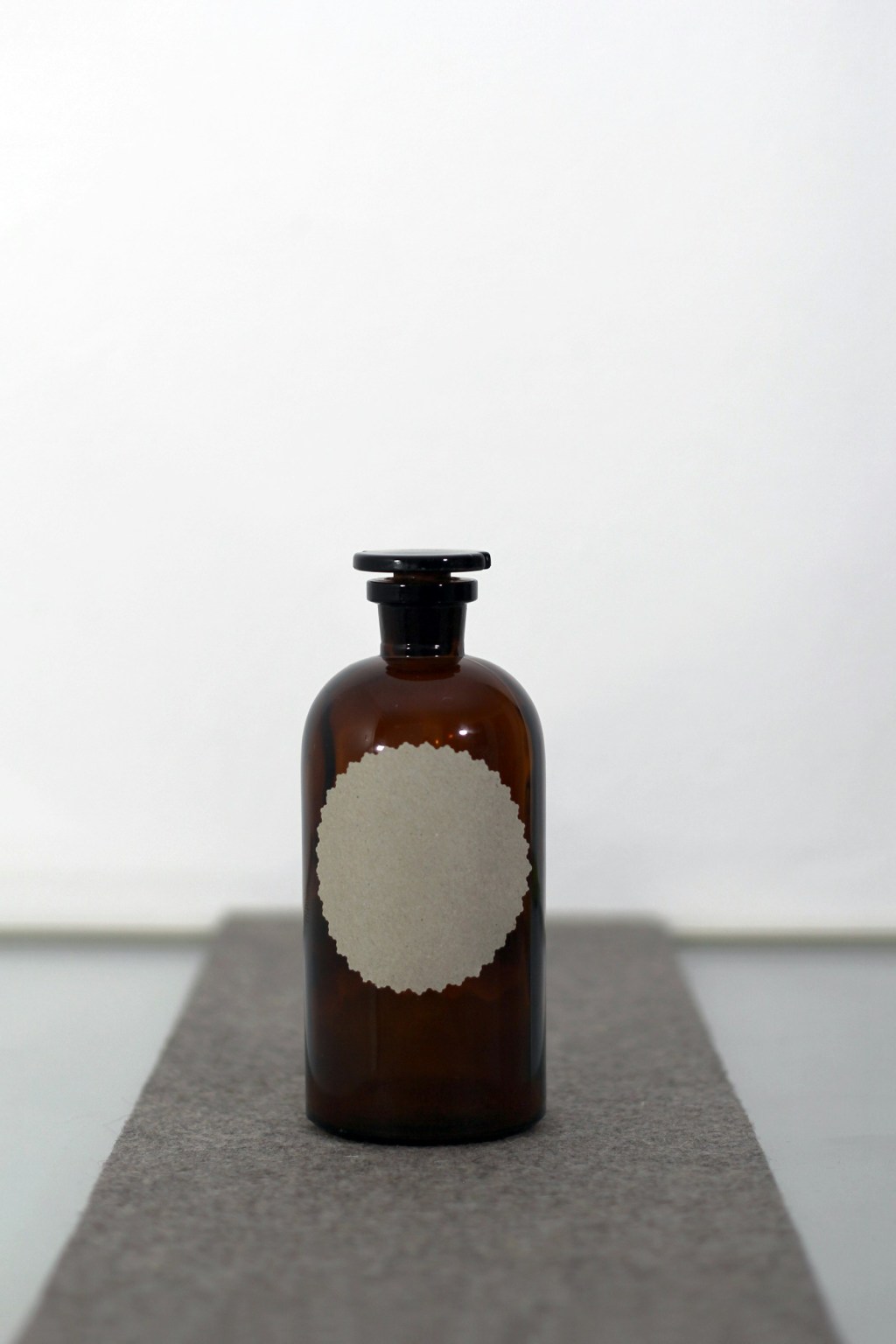
A witch bottle is a sealed vessel of sharp, tangled and protective things, made to guard a home against ill will. Knowing how to make a witch bottle starts with knowing what people actually did with them, because this is one of the best documented pieces of folk magic in England, and the archaeology is more interesting than most of what gets repeated online.
What a witch bottle actually is
Archaeologists have found hundreds of them, mostly in southern and eastern England, tucked under floors, beside hearths and beneath thresholds. A Bartmann (Bellarmine) jug, the bearded stoneware kind made in Frechen near Cologne, was a favourite vessel. One researcher’s tally of about 250 English witch bottles on record counts around 130 of these jugs, with the practice appearing to begin in the mid-17th century (Apotropaios).
The contents were consistent. The same source reports iron pins or nails in roughly 95 percent of identifiable contents, with hair, bones, thorns and heart-shaped scraps of cloth turning up less often. Some contained urine. The 2019 to 2022 Great Hunt for Witch Bottles project, run by Museum of London Archaeology, describes the finds as pins, wool coils, tangled thread and nails, and notes the practice continues today (The Wild Hunt).
A bottle dug up in Battersea, with a medallion dated 1669, was found with a cat’s skull and sat in a pit near a house’s foundations (Wandsworth Historical Society). The Museum of Witchcraft and Magic holds a Bellarmine jar found hidden in a table tomb near Exeter Cathedral in 1950, and its own record admits the dating is uncertain, perhaps 17th century, perhaps early to mid 20th (Museum of Witchcraft and Magic).
Why it works, as a piece of folk magic
The historical logic was a counter-spell. People who believed they were under attack made a bottle to catch the harm, trap it, and turn it back. The pins and nails were the teeth of the trap. Iron had a long reputation in European folk belief as a metal that unwelcome things avoid. Hearths and doorways were chosen because they were the open gaps in a house, so the bottle sat where something would try to enter.
That gives you a clear design principle for a modern version: a witch bottle is a decoy and a guard. It holds a stand-in for you, something sharp to snag trouble, and a seal to keep it contained. The making also does practical work on your own attention. Naming what you are guarding against, deciding what belongs in the bottle and sealing it is a concentrated act, and that focus is a large part of why people feel steadier afterwards. Treat it as one layer of protection alongside locks, boundaries and honest conversations, not a replacement for them.
Ingredients and what each one does
Iron pins and nails are the core. They are the traditional teeth. Use new, bent or rusty ones as you like, but handle them carefully.
Rosemary is a long-standing herb of remembrance and protection, and it asks very little of you. It is hardy, fragrant and forgiving, which suits a bottle meant to sit quietly for years. If you want stronger company, a pinch of black peppercorns brings a sharp, warming edge to the working.
A personal link is traditionally essential. Historic bottles used hair, nail clippings or urine. A modern, tidier option is a small slip of paper with your name written on it, or a single hair. Skip the urine. It is unpleasant, it can leak or ferment, and a sealed glass bottle that builds pressure is a hazard.
A small glass bottle or jar with a cork or screw lid, and a little candle wax to seal it, completes the set. If you would rather buy dried herbs than gather them, Mountain Rose Herbs ships from the US. Note that Australian biosecurity rules apply to herbs and plant material, so check the Department of Agriculture before you order. Dried rosemary from a local supermarket or your own garden works just as well.
Safety first
Pins and nails are sharp. Wear thick gloves when handling them, work over a tray so none roll away, and count them in and out. Keep the finished bottle well away from children and pets, because a glass bottle full of metal is not a toy. Do not use a bottle that has held food or drink you cannot clean fully, and do not fill it with anything that can ferment or release gas once sealed.
When you seal with wax, use a stable candle holder, keep hair and sleeves back, and never leave a flame unattended. Do not heat the bottle itself. If you plan to bury it, only do so on your own land, never on public ground, in bushland or in a garden bed with edible plants. Dig deep enough that a spade or a curious animal will not find broken glass later. Do not add salt if the bottle will be buried or placed near soil, since salt can damage plants.
How to make a witch bottle
Choose a time when you will not be interrupted, and many practitioners favour the waning moon for protective work, which means the days after the 26 October full moon are well placed this month. Clean your bottle and let it dry. Put on gloves, light a single candle in a safe holder and take a few slow breaths while you decide what the bottle is guarding, whether that is your home, a doorway, or a pattern of draining contact you want fewer of. Write your name on the slip of paper, fold it small and drop it into the bottle first as the stand-in for you. Add your bent pins and nails one at a time, naming the thing each one is there to catch, then a pinch of rosemary and a few peppercorns, and tell the bottle plainly what its job is and how long you expect it to keep it. Seal it with the cork or lid, drip candle wax over the join until it is closed, and hold the bottle for a moment while you say that the working is done. Then put it in its place: hearth, behind the front door, or the back of a wardrobe near the main entrance, somewhere out of reach of kids and pets and out of sight of visitors. Wash your hands and pack away the leftover pins.
Where to keep it and when to retire it
Traditionally, bottles sat near the hearth or the threshold. Today, a spot near your main entry or the room where you spend most of your time makes sense. If you also want a threshold working, the salt and rosemary home protection spell pairs well, and the spell jar guide covers sealing methods in more detail.
Many practitioners leave a bottle for a year and a day, or until the situation it was made for has resolved. To retire it, thank it, break the wax seal outdoors, wearing gloves, and dispose of the pins safely wrapped in paper in the bin. Bury the herbs and paper in your own garden or compost the herbs if you like. Never throw loose pins away.
Honest limits
A witch bottle will not fix a toxic workplace or a dangerous person. If someone is threatening you, speak to the police or a support service. The bottle is one quiet piece of a wider practice of protection, and its history shows that. People have always made them alongside the practical business of living. What the archaeology shows is not a single rule but a family of habits, so adapt yours to what is safe, available and meaningful where you live.


Leave a Reply